
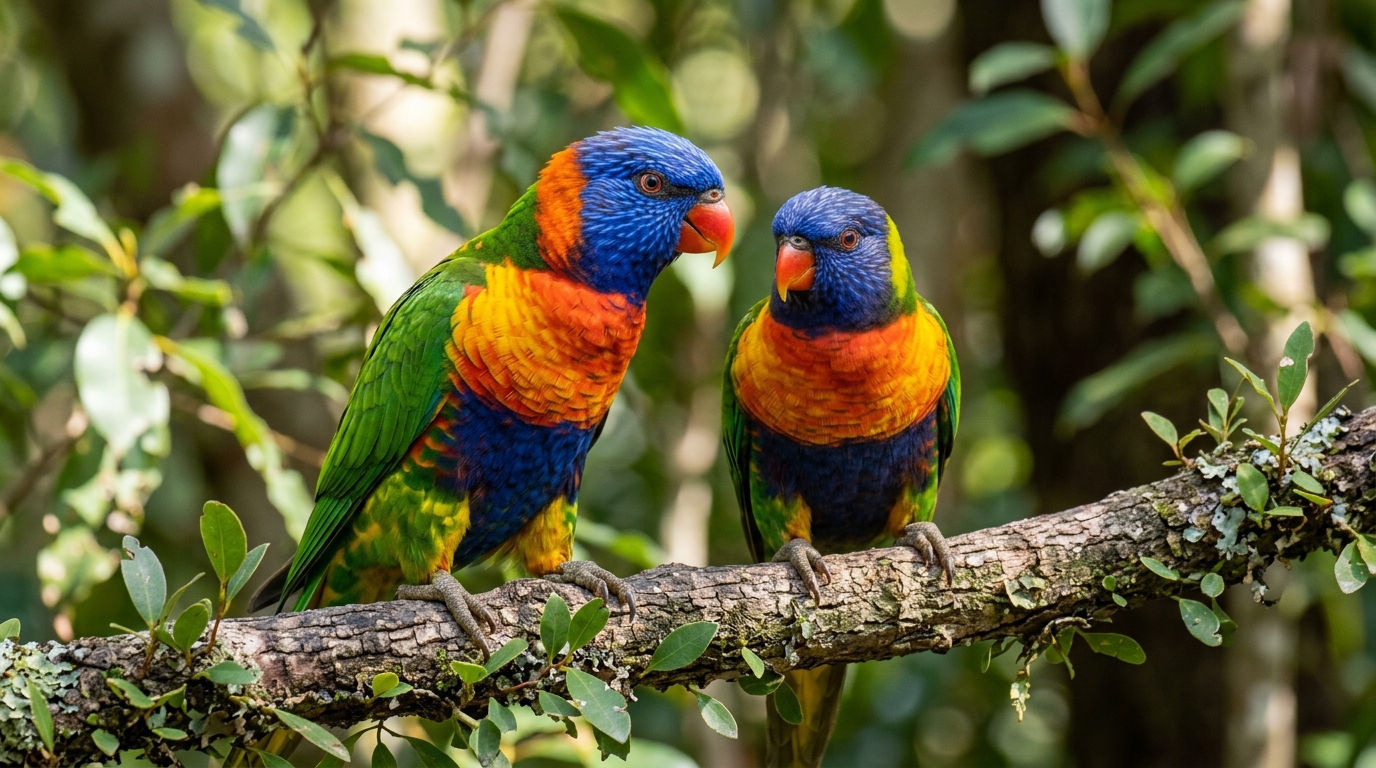
Rainbow lorikeets are sexually monomorphic, meaning males and females are visually identical in plumage, size, and colouration. No reliable visual method exists for telling them apart. The only accurate approach is a DNA feather test, which analyses chromosomal markers from a small feather sample sent to a specialist genetics laboratory.
The rainbow lorikeet (Trichoglossus moluccanus) is one of Australia’s most recognisable parrots, celebrated for its vivid, multi-coloured plumage and energetic personality. Yet this brilliance creates an immediate challenge for owners, breeders, and birdwatchers: there are no visible differences between males and females.
This guide covers every practical aspect of rainbow lorikeet sexing: what the plumage of each sex looks like (spoiler: identical), whether size or behaviour gives anything away, what happens during breeding season, and which methods vets and breeders actually rely on to get a confirmed answer.
Key Takeaways
- Rainbow lorikeets are sexually monomorphic: males and females share identical plumage with no distinguishing markings.
- Size differences between the sexes are negligible and cannot be used for reliable identification.
- Behavioural clues during the breeding season (courtship feeding, nest-sitting) can suggest sex but are not definitive.
- DNA feather testing is the most accurate, affordable, and non-invasive sexing method available.
- Female lorikeets develop a brood patch during incubation, visible only on handling.
- Knowing the sex of a pet lorikeet matters for health monitoring, pairing, and managing reproductive conditions such as egg binding.
What Does a Rainbow Lorikeet Look Like?
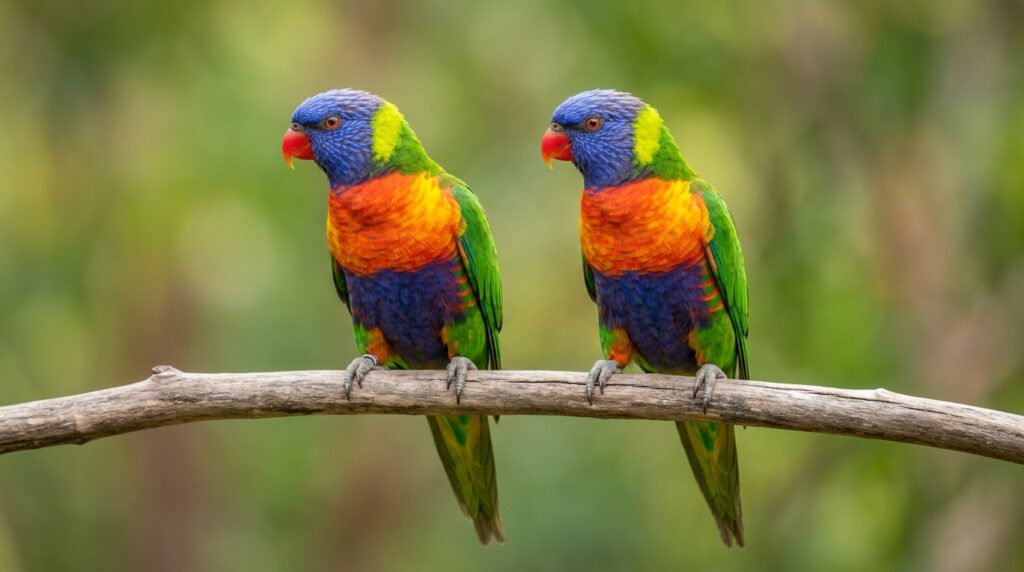
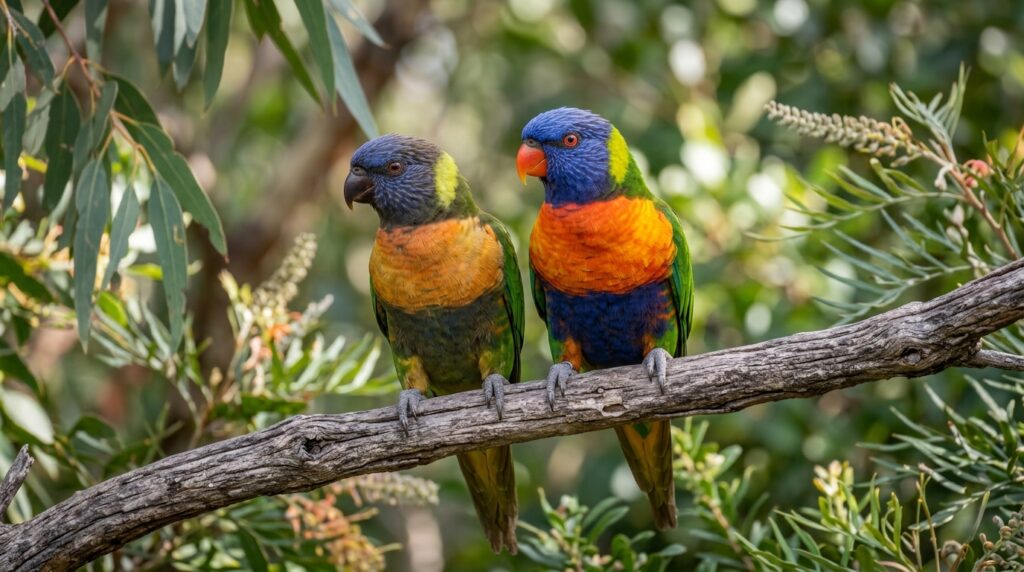
The rainbow lorikeet is a medium-sized parrot, measuring roughly 25 to 30 cm in length and weighing between 75 and 157 grams. Its colour pattern is consistent across both sexes and across most of the wild population in eastern and south-eastern Australia:
- Head: Deep blue to violet-blue
- Breast: Orange-red, often with yellow streaking at the sides
- Back and wings: Bright green, providing camouflage among foliage
- Belly: Blue-purple, creating a sharp contrast with the orange breast
- Collar: A yellowish-green band separating the blue head from the green back
- Bill: Bright orange-red in adults, used to access flower nectar
- Eyes: Orange-red iris in adults; dark brown in juveniles
Both males and females display this exact plumage pattern. There is no male-specific crest, more intense colouration, or larger bill that separates the sexes. This is what makes the species genuinely challenging to sex by sight. Unlike many bird species, where dramatic colour differences evolved to support mate selection (as explored in why not all brightly coloured bird species follow the same rules), the rainbow lorikeet evolved without that visual shortcut.
Are Male and Female Rainbow Lorikeets the Same Size?
Sexual dimorphism in size is absent in rainbow lorikeets in any practical sense. Some measurements from captive populations suggest males may be marginally heavier on average, but individual variation is so wide that a large female can easily outweigh a smaller male.
Wingspan, body length, tail length, and bill size show the same overlap. Without an accurate scale, a standardised measurement protocol, and a large reference population to compare against, body size is not a workable sexing method.
How Do Behavioural Differences Help Identify Sex?
Behaviour provides the most accessible clues for distinguishing males from females, and these clues are most visible during the breeding season. In Australia, rainbow lorikeets typically breed between August and January, though captive birds may show breeding behaviour at other times of year.
Courtship Feeding
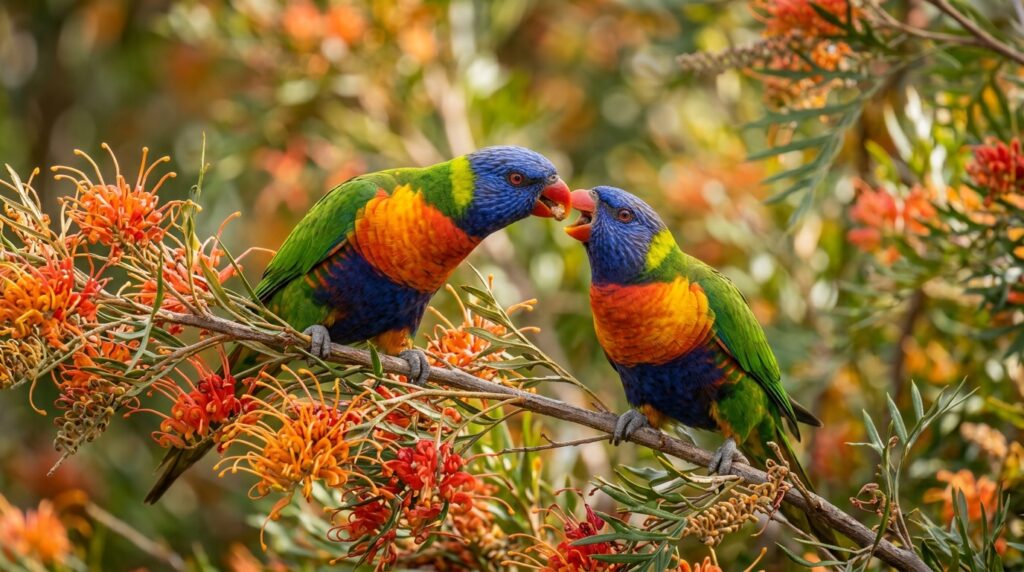
During pair bonding, the male typically regurgitates food directly into the female’s beak. This behaviour, known as allofeeding or courtship feeding, is a strong indicator that the feeding bird is male. However, bonded same-sex pairs occasionally exhibit similar behaviour, so it is not a guarantee.
Nest-Sitting and Incubation
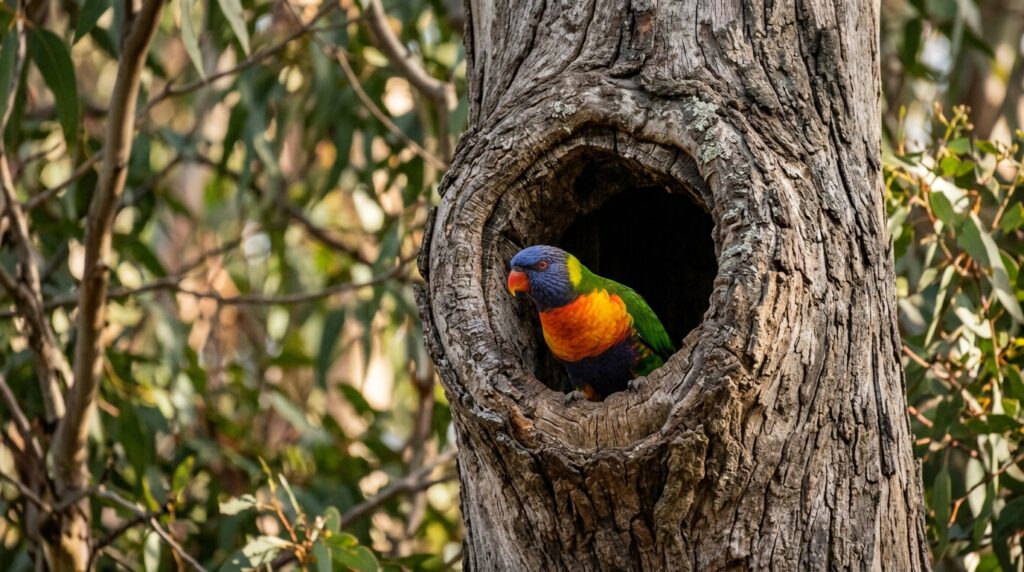
The female is primarily responsible for egg incubation. In an established pair, the bird that spends more time inside the nesting hollow or nest box is almost always female. The male typically remains outside, perching near the entrance or in the immediate vicinity.
Bob-Displaying and Vocalisation
Males often show more assertive territorial behaviour during the breeding season, including rhythmic head-bobbing with wings partially spread and elevated vocalisation rates. Individual personality varies considerably, so this is a supporting clue rather than a definitive indicator.
Mating Behaviour
When mating is directly observed, the bird on top is male. This is an unambiguous indicator, but it requires watching the pair at the right moment.
The Brood Patch: A Physical Clue Visible Only During Breeding
One genuine physical difference between the sexes exists, but only during nesting season. The brood patch is a featherless or thinly feathered area on the lower belly that develops in females during incubation, enabling direct heat transfer from skin to egg.
The brood patch develops in female rainbow lorikeets a week or two before egg laying and disappears once the chicks have hatched and the incubation period ends. Identifying it requires carefully handling the bird, parting the belly feathers, and looking for a patch of bare, slightly reddened skin. Experienced breeders use this during the breeding season to confirm a suspected female, but it is unavailable outside that window.
Juvenile vs Adult Rainbow Lorikeets: Identifying Young Birds
Young rainbow lorikeets look noticeably different from adults and are sometimes mistaken for a different sex or subspecies. Key differences include:
- Bill: Dark brown to blackish in juveniles, compared to the bright orange-red of adults
- Eyes: Dark brown iris, compared to the orange-red iris of mature birds
- Plumage: Generally duller, with less intense orange on the breast and a less vivid blue head
- Collar: Less well-defined yellowish-green band
Juvenile plumage is replaced as birds approach sexual maturity, usually between 12 and 18 months of age. From this point onward, the sexes become visually indistinguishable from one another.
How to Sex a Rainbow Lorikeet Accurately
Because visual and behavioural methods are unreliable or situationally limited, two accepted methods provide definitive results.
DNA Feather Testing
DNA sexing is now the standard method used by breeders and keepers worldwide. A few feathers, typically pulled from the chest or wing, are sent to a specialist genetics laboratory. The feather follicle cells contain chromosomal DNA that clearly indicates whether the bird is male (ZZ chromosomes) or female (ZW chromosomes), the same sex-determination system found across most bird species.
Results are typically returned within one to two weeks and are highly accurate. Many breeders include DNA certification with birds sold as confirmed males or females. The cost is modest, the process is straightforward, and the bird experiences no anaesthetic risk.
Surgical Sexing
Surgical sexing (also called laparoscopic or endoscopic sexing) involves a brief procedure under general anaesthesia in which a specialist vet uses a small camera to directly visualise the gonads. It is highly accurate but carries anaesthetic risks and is now rarely preferred over the simpler DNA test. It may still be used when a vet needs to assess reproductive organ health at the same time.
Rainbow Lorikeet Breeding: Roles of Male and Female
Understanding the sex of a breeding pair is essential for anyone hoping to produce chicks. Rainbow lorikeets nest in tree hollows in the wild and readily accept deep, vertical nest boxes in captivity. Understanding the basics of what makes a good bird nest environment applies here: the depth of the hollow, the entrance diameter, and shelter from direct weather all influence whether a pair will commit to breeding.
The typical breeding cycle for Trichoglossus moluccanus:
| Stage | Detail |
|---|---|
| Clutch size | 2 eggs, occasionally 3 |
| Incubation period | Approximately 25 days |
| Primary incubator | Female |
| Chick brooding | Female broods; male delivers food |
| Fledging age | Approximately 7 to 8 weeks |
| Post-fledging care | Both adults feed fledglings for several weeks |
If a female is kept as a single pet, she may still lay infertile eggs if environmental conditions trigger the reproductive cycle. This is a health consideration that warrants monitoring.
Male vs Female Rainbow Lorikeet: Side-by-Side Comparison
| Feature | Male | Female |
|---|---|---|
| Plumage colour | Identical to female | Identical to male |
| Body size | Marginally heavier on average | Marginally lighter on average |
| Incubation duty | None | Primary incubator |
| Brood patch | Absent | Develops during breeding season |
| Courtship feeding | Feeds the female | Receives food from male |
| Mating position | Mounts female | Mounted by male |
| DNA chromosomes | ZZ | ZW |
| Reliable visual sexing | Not possible | Not possible |
Common Misconceptions About Sexing Rainbow Lorikeets
“The one that talks more is male.” There is no evidence that one sex mimics or vocalises more than the other. Talking ability depends on individual temperament and early socialisation, not sex.
“Males are always more aggressive.” While males can show more territorial behaviour during the breeding season, many females are equally assertive. Personality varies greatly between individual birds.
“You can tell by the shape of the head.” Some keepers claim males have a flatter or broader crown. This has no scientific basis and produces unreliable results.
“Brighter colours mean male.” In monomorphic species, colour intensity reflects age, diet quality, and lighting conditions, not sex.
Why Knowing the Sex of Your Rainbow Lorikeet Matters
For owners keeping a single bird, sex can seem irrelevant. In practice, it has real consequences:
Health monitoring. Female lorikeets are at risk of chronic egg laying (producing infertile eggs repeatedly) and egg binding, a potentially life-threatening condition in which a bird cannot expel a formed egg. Knowing your bird is female allows for early monitoring and dietary management.
Pairing. Introducing a second lorikeet without knowing the sex of either bird can result in same-sex pairings that produce no chicks, or, in some cases, sustained aggression between birds of the same sex.
Seasonal behaviour. A female showing territorial behaviour around a corner of the cage during breeding season is likely expressing nesting instinct, not aggression or illness. Context matters.
Aviary management. In a mixed flock, knowing the sex of each bird enables better management of breeding pairs and prevents repeated same-sex pairings.
Observing Rainbow Lorikeets: Practical Tips
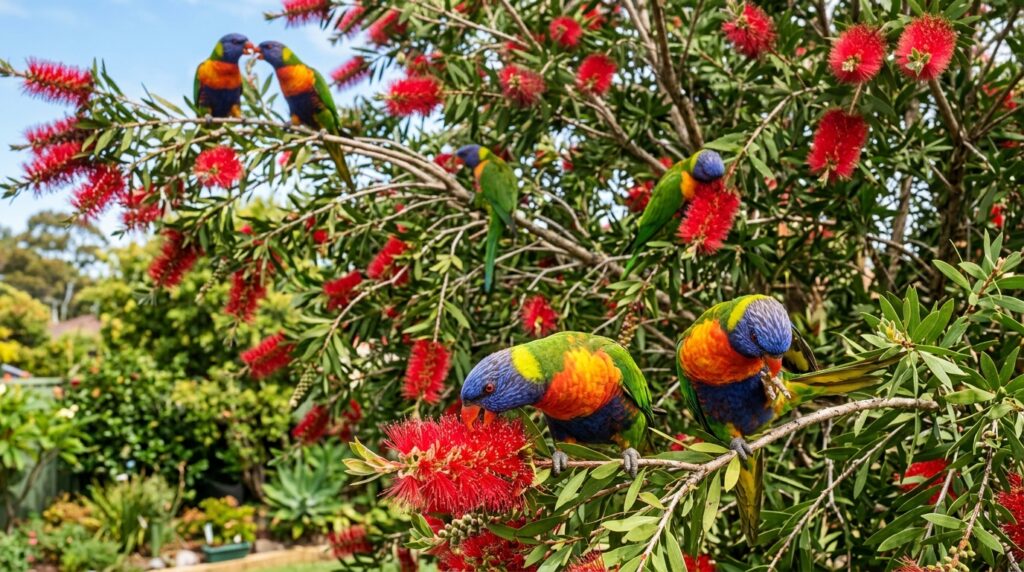
Wild rainbow lorikeets congregate in flowering trees across eastern Australia in large, noisy flocks. Attracting them to a garden is achievable in areas where they are native, and studying their behaviour at close range helps with understanding pair dynamics and identifying courtship behaviours.
A well-maintained bird bath is one of the most effective ways to draw wild lorikeets into a garden space. The species bathes regularly and with evident enthusiasm, splashing vigorously and spending considerable time preening afterwards.
For anyone wanting to observe courtship feeding or other pair behaviours in detail without disturbing the birds, a smart bird feeder with a camera positioned near a known foraging area can capture these moments clearly. Footage of one bird feeding another is often the first real behavioural clue to sex.
Final Thoughts
Telling a male rainbow lorikeet from a female by sight alone is not possible, and no shortcut exists. The species evolved as a monomorphic parrot, and both sexes developed identical plumage because this arrangement serves their survival and reproductive success equally well.
For breeders, a confirmed pair matters for productivity and breeding management. For pet owners, sex matters for health monitoring and interpreting seasonal behaviour. For birdwatchers observing wild flocks, the honest answer is: it cannot be determined visually, and observing behaviour during the breeding season is the best available clue.
A straightforward DNA feather test removes all uncertainty at minimal cost. For anyone who genuinely needs to know the sex of their bird, it is the only sensible step to take.
Related Posts
- Rainbow Lorikeet Diet: What These Colourful Birds Really Eat
- Rainbow Lorikeet: Complete Species Guide on Behaviour, Diet, Habitat and Care.
Frequently Asked Questions (FAQ)
Q: Can you visually tell a male rainbow lorikeet from a female?
A: No. Rainbow lorikeets are sexually monomorphic, meaning both sexes have identical plumage, colouration, and body size. Visual sexing is not possible under normal conditions.
Q: What is the most reliable way to sex a rainbow lorikeet?
A: DNA feather testing is the most reliable, affordable, and non-invasive method. A few feathers are sent to a specialist genetics laboratory, which analyses chromosomal markers to confirm sex. Results typically arrive within one to two weeks.
Q: Do male rainbow lorikeets talk more than females?
A: No. There is no reliable evidence that one sex talks or mimics more than the other. Mimicry ability depends on individual temperament and how early and consistently the bird was trained.
Q: Can a female rainbow lorikeet lay eggs without a mate?
A: Yes. Female rainbow lorikeets can produce infertile eggs without a male present, particularly if diet, light cycles, or environmental conditions trigger the reproductive cycle. This is known as chronic or excessive egg laying and can deplete calcium reserves, potentially leading to health complications.
Q: How long do rainbow lorikeets live?
A: In captivity with proper care, rainbow lorikeets typically live 15 to 20 years. Wild birds generally have shorter lifespans due to predation and environmental pressures.
Q: What do rainbow lorikeets eat?
A: Rainbow lorikeets are specialist nectar feeders with a brush-tipped tongue adapted for extracting nectar and pollen from flowers. In captivity, a commercially formulated wet lorikeet diet forms the base of their nutrition, supplemented with fresh fruit and edible flowers. Standard seed mixes are not appropriate as a primary diet.
Q: Are rainbow lorikeets good pets?
A: Rainbow lorikeets are energetic, loud, and highly social birds that need significant daily interaction and mental stimulation. They suit experienced bird keepers who can commit the necessary time. They are not typically recommended for first-time owners or those in noise-restricted housing.
Q: At what age do rainbow lorikeets reach sexual maturity?
A: Rainbow lorikeets typically reach sexual maturity between 12 and 18 months of age. Adult plumage fully develops around this time in both sexes.
Q: What is a brood patch, and which sex develops it?
A: A brood patch is a featherless or thinly feathered area on the belly that develops in female rainbow lorikeets during incubation. It allows direct heat transfer from the female’s skin to the eggs. The patch disappears after the chicks hatch and is only visible during a brief window in the breeding season.
Q: Are rainbow lorikeets endangered?
A: No. The rainbow lorikeet (Trichoglossus moluccanus) is classified as Least Concern by the IUCN Red List. The species is abundant across eastern and south-eastern Australia and has established introduced populations in parts of Western Australia, New Zealand, and Hong Kong.
Q: How many eggs does a rainbow lorikeet lay?
A: A typical rainbow lorikeet clutch contains two eggs, occasionally three. Incubation lasts approximately 25 days and is carried out primarily by the female. Chicks fledge at around seven to eight weeks of age.
Q: What is the difference between a rainbow lorikeet and a scaly-breasted lorikeet?
A: The scaly-breasted lorikeet (Trichoglossus chlorolepidotus) lacks the blue head and orange breast of the rainbow lorikeet. Its plumage is predominantly green with distinctive yellow scalloping across the breast and belly. The two species have overlapping ranges in eastern Australia and are sometimes found feeding together in the same trees.
Sources:
Australian Museum. Rainbow Lorikeet: Trichoglossus moluccanus. https://australian.museum/learn/animals/birds/rainbow-lorikeet/
