
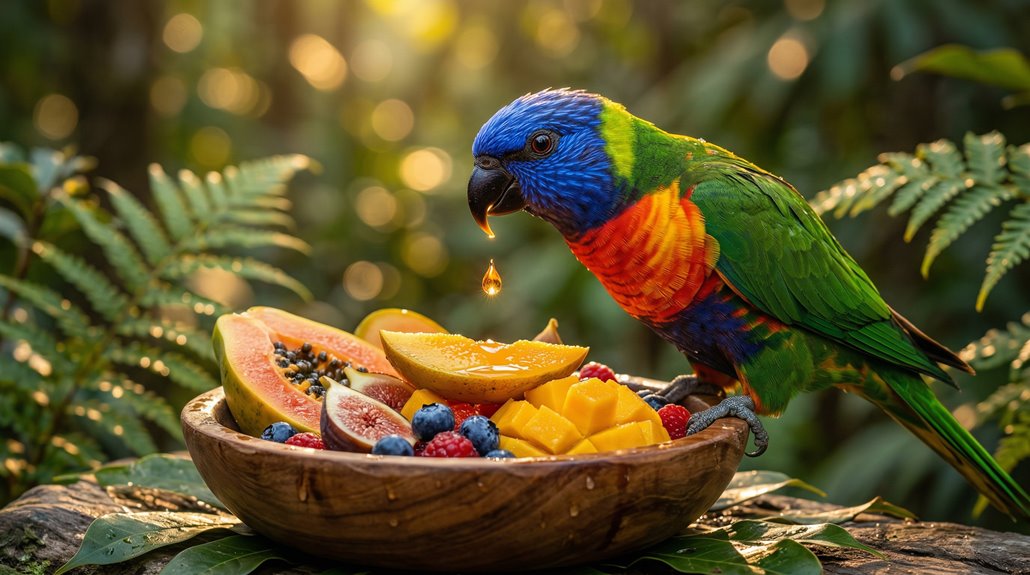
Rainbow lorikeets are not like most parrots. While many pet birds do well on seeds or standard parrot pellets, rainbow lorikeets have very different feeding needs. These bright, active birds are specialist nectar feeders, built to live on soft, sugary, flower-based foods rather than hard, dry diets.
If you have ever wondered what rainbow lorikeets really eat, the short answer is this: their diet is built mainly around nectar and pollen, with soft fruits and small extras playing a supporting role. In captivity, the safest way to feed them is with a quality commercial lorikeet formula, plus carefully chosen fresh foods on the side.
Getting the diet right matters. A poor diet can lead to digestive problems, spoiled-food infections, feather issues, low energy, and long-term health trouble. The good news is that once you understand the basics, feeding a rainbow lorikeet correctly is actually pretty simple.
Quick Answer: What Do Rainbow Lorikeets Eat?
Rainbow lorikeets mainly eat nectar and pollen from flowers. In the wild, they also eat soft fruits, blossoms, and small amounts of insects. As pets, they do best on a high-quality commercial lorikeet wet or dry mix, with fresh fruit and safe flowers offered as supplements. Seed-heavy diets, bread, dairy, and homemade honey or sugar mixes are not suitable for them.
Key Takeaways
- Rainbow lorikeets are nectar and pollen feeders, not typical seed-eating parrots.
- A commercial lorikeet formula should form the foundation of a pet lorikeet’s diet.
- Fresh fruit, edible flowers, and safe browse can be offered as extras.
- Wet lorikeet mix spoils quickly and needs to be replaced regularly.
- Avocado, chocolate, caffeine, onion, garlic, alcohol, and sugary homemade mixes should never be fed.
- The best way to support wild lorikeets is by planting nectar-rich native flowers.
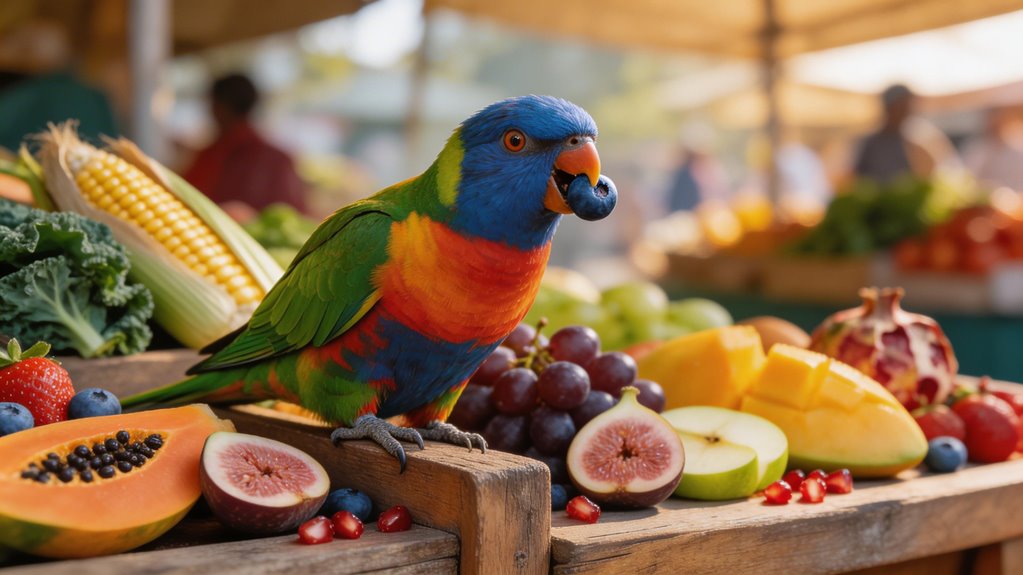
What Do Rainbow Lorikeets Eat in the Wild?
Nectar and Pollen Are the Main Foods
In the wild, rainbow lorikeets feed mainly on nectar and pollen from flowering trees and shrubs. This is the core of their natural diet and the reason they are so different from most other parrots.
Their favourite food sources often include:
- Eucalyptus
- Grevillea
- Bottlebrush
- Banksia
- Melaleuca
- Tea tree blossoms.
These flowers give lorikeets fast energy from nectar and useful nutrients from pollen. Because flowering changes with the seasons, lorikeets often move around in flocks to follow the best blooms.
Soft Fruits and Blossoms Add Variety
Wild rainbow lorikeets also eat soft fruits, berries, and flower parts. These foods add variety and moisture to the diet, especially when flowering is less reliable.
They may also take small insects or larvae now and then. That does not mean insects are a major part of their diet, but it does show that lorikeets are not living on pure sugar alone.
Why Lorikeets Are Built for This Kind of Feeding
Rainbow lorikeets have a brush-tipped tongue that helps them collect nectar and trap pollen. Their digestive system is designed for soft, moist foods. That is why feeding them like a budgie, cockatiel, or other seed-based parrot can cause real problems.
What Should a Pet Rainbow Lorikeet Eat?
If you keep a rainbow lorikeet at home, the goal is not to copy the wild diet perfectly. The goal is to match its nutritional pattern as closely and safely as possible.
Use a Quality Commercial Lorikeet Formula
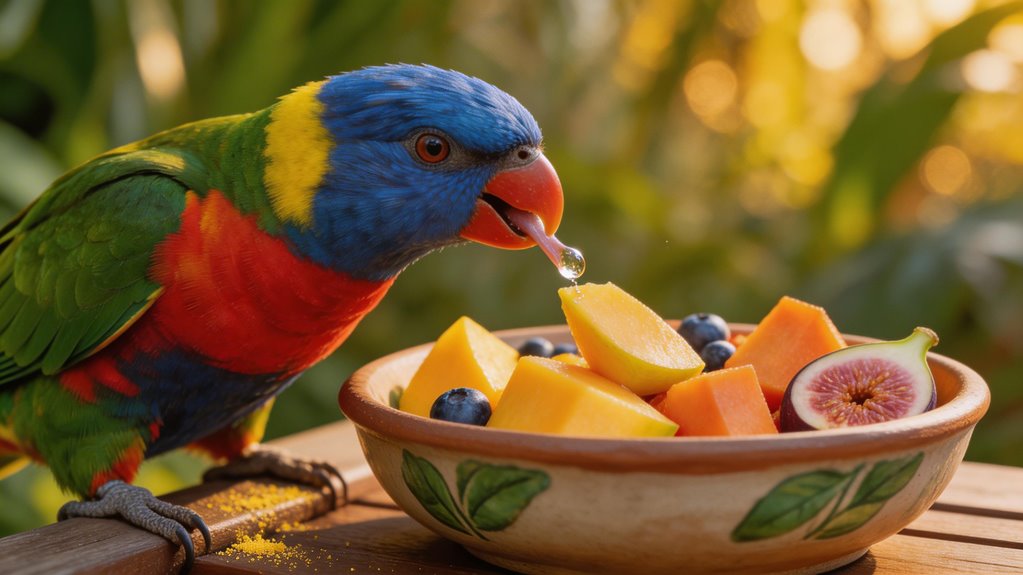
A commercial lorikeet wet mix or dry lorikeet formula should be the main part of the diet. This is the most reliable way to give your bird balanced nutrition.
Lorikeet formulas are made for birds that need soft, nectar-style feeding. They are very different from standard parrot pellets or seed mixes.
You will usually find two main types:
Wet Lorikeet Mix
This is usually a powder mixed with water into a nectar-like food. Many lorikeets love it, but it spoils quickly, especially in warm weather.
Dry Lorikeet Formula
This is more convenient and less messy. Some owners use it on its own, while others use it alongside wet mix.
Both can work well as long as the product is made specifically for lorikeets.
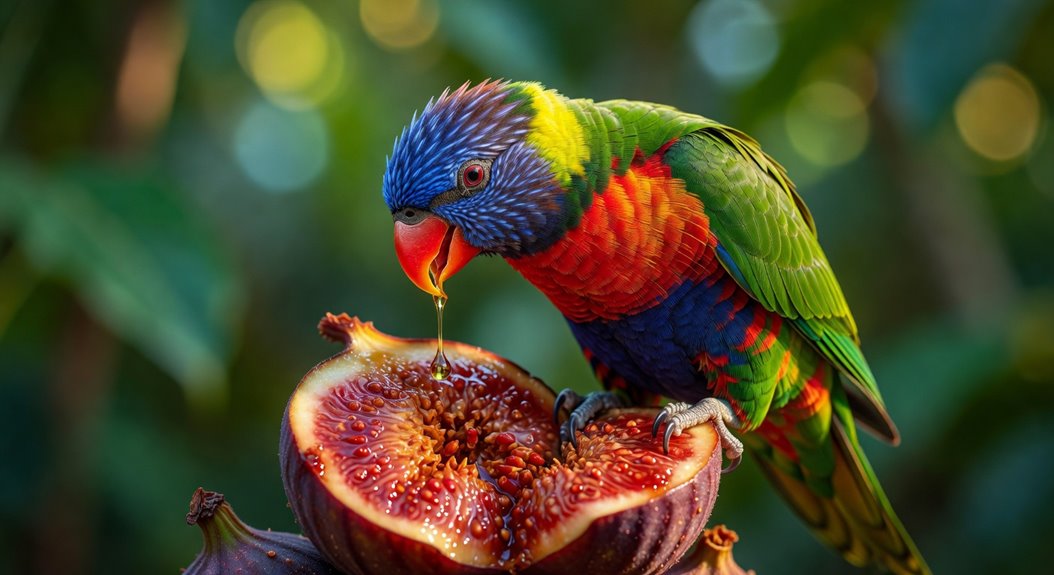
Fresh Foods Should Be a Supplement, Not the Whole Diet
Fresh foods are useful, but they should support the main diet, not replace it. Too much fruit and not enough balanced lorikeet formula can leave a bird overfed on sugar and underfed on important nutrients.
Good fresh extras can include:
- Apple
- Pear
- Melon
- Papaya
- Berries
- Seedless grapes in moderation
- Small amounts of cucumber or carrot
- Safe edible flowers such as bottlebrush, grevillea, hibiscus, or nasturtium.
Always wash fresh foods well and offer them in small, manageable pieces.
Native Browse Is Excellent Enrichment
Lorikeets enjoy feeding in a more natural way, so safe native browse can be a great addition. Pesticide-free flowering branches from suitable plants can keep them mentally engaged and encourage natural foraging behaviour.
This works especially well with:
- Bottlebrush
- Grevillea
- Banksia
- Eucalyptus.
If you are not completely sure a plant is safe or free from sprays, do not use it.
Do Rainbow Lorikeets Eat Seeds?
This is one of the biggest points of confusion.
Yes, rainbow lorikeets may nibble some seeds in the wild from time to time. But that does not mean seeds should form the basis of a pet lorikeet’s diet.
A seed-heavy captive diet is one of the most common feeding mistakes with lorikeets. Seeds are too fatty and do not match the way these birds are built to eat. Over time, a poor diet can lead to nutritional deficiencies, digestive issues, obesity, and liver problems.
So the better answer is this: rainbow lorikeets are not true seed-based parrots, and they should not be fed like one.
Foods Rainbow Lorikeets Can Eat
Here is a simple guide to foods that are generally suitable for rainbow lorikeets.
| Category | Foods |
|---|---|
| Best staple foods | Commercial lorikeet wet mix, commercial lorikeet dry formula, fresh clean water |
| Safe fruits | Apple, pear, melon, papaya, blueberries, strawberries, seedless grapes in small amounts, banana in moderation, mango in moderation, watermelon as an occasional treat |
| Safe extras | Bottlebrush flowers, grevillea flowers, banksia flowers, hibiscus, nasturtium, small amounts of cucumber, small amounts of carrot, small amounts of corn |
The key is variety, moderation, and freshness.
Foods to Avoid
Some foods are genuinely dangerous. Others are not ideal and should still stay off the menu.
| Category | Foods | Why to Avoid |
|---|---|---|
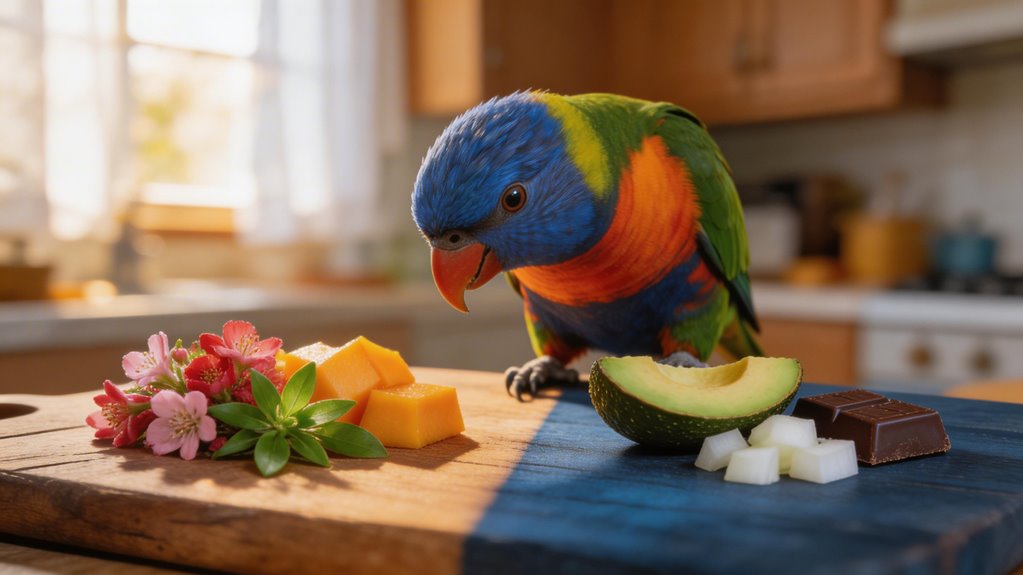
| Toxic foods | Avocado, chocolate, caffeine, alcohol, onion, garlic, xylitol-sweetened foods | These can cause serious illness and, in some cases, death. |
| Unsafe or unsuitable foods | Bread, dairy, salty snacks, fried foods, sugary processed foods, standard parrot seed mixes, sunflower seeds as regular food, homemade honey mixes, homemade sugar water, jam-based mixtures, fruit juice as a staple | These are not suitable for a healthy lorikeet diet and can lead to nutritional or digestive problems. |
Why Homemade Honey or Sugar Mixes Are a Bad Idea
A lot of people assume nectar-feeding birds can simply be given honey water or sugary homemade mixtures. That sounds logical at first, but it is not the safest option.
Homemade mixes can:
- Spoil quickly
- Grow harmful bacteria or yeast
- Lack balanced nutrition
- Contain the wrong sugar profile
- Encourage long-term health problems.
A proper commercial lorikeet formula is the safer choice. It is made to support the bird’s nutritional needs more reliably than improvised home recipes.
How Often Should You Feed a Rainbow Lorikeet?
Rainbow lorikeets have a fast-moving digestive system and need fresh food offered regularly.
Basic Feeding Schedule
A simple daily routine looks like this:
Morning
Offer fresh lorikeet mix and clean water.
Midday
Remove spoiled food. Offer a small amount of fresh fruit or flowers if you use them.
Afternoon
Refresh the lorikeet mix again, especially if you are using a wet product.
Evening
Make sure no spoiled wet food is left behind, and water is still clean.
Most lorikeets do best when food is refreshed at least twice a day. In hot weather, the wet mix may need replacing more often.
How Long Can Lorikeet Food Sit Out?
This is where many owners go wrong.
Wet lorikeet mix should not be left sitting around all day. In warm conditions, it can spoil or ferment surprisingly fast. Fresh fruit should not be left too long either.
As a rule:
- Wet mix should be replaced within a few hours in warm weather
- Fresh fruit should be removed once it starts drying out, looking messy, or sitting too long
- Water should be refreshed often, especially if the bird bathes in it
When in doubt, change it sooner rather than later.
How to Keep Lorikeet Food and Water Fresh
Food hygiene matters a lot with lorikeets because their diet is moist and sticky.
Daily Freshness Tips
- Mix only what your bird is likely to eat in a short period
- Remove uneaten wet food before it spoils
- Wash bowls daily with hot, soapy water
- Rinse everything well before reuse
- Replace water often
- Keep feeding areas clean and dry.
Lorikeets are messy eaters, so dirty bowls and sticky feeding areas can become a problem quickly if you do not stay on top of them.
Should You Feed Wild Rainbow Lorikeets?
This is a common question, especially if you get lorikeets visiting your yard.
The safest long-term way to help wild lorikeets is not hand-feeding. It is planting nectar-rich flowers and shrubs that let them forage naturally.
If you choose to offer supplementary food, it should be done carefully. Bread, honey water, sugar water, and random kitchen scraps are poor choices. If anything is offered, it should be a proper bird nectar mix used cleanly and replaced often.
Even then, natural habitat is still the better solution.
Common Rainbow Lorikeet Diet Mistakes
1. Feeding Them Like Other Parrots
Lorikeets are often grouped with parrots, so people assume the same food works for all of them. It does not.
2. Relying Too Much on Fruit
Fruit is useful, but it is not a complete diet.
3. Leaving Wet Food Out Too Long
Spoiled food can lead to digestive problems and infections.
4. Using Homemade Sweet Mixes
These are unreliable and can be risky.
5. Offering Bread or Processed Human Food
These foods fill the bird up without giving it what it actually needs.
Signs Your Lorikeet’s Diet May Need Attention
If a lorikeet’s diet is not working well, the signs often show up in its energy, droppings, or appearance.
Watch for:
- Lethargy
- Weight loss
- Poor feather condition
- Changes in droppings
- Loss of appetite
- Messier digestion than usual
- Low activity levels.
These signs do not always mean diet is the only problem, but they are a good reason to review feeding and speak to an avian vet.
Final Thoughts
Rainbow lorikeets are beautiful birds with very specialised feeding needs. Their diet is built around nectar and pollen, with soft fruits and safe browse playing a supporting role. That is very different from the needs of most other parrots.
If you want a pet rainbow lorikeet to do well, keep things simple. Use a quality lorikeet formula as the foundation, offer fresh foods in moderation, keep everything clean, and avoid risky homemade or processed foods.
Get those basics right, and you will be giving your lorikeet the kind of diet it is actually built to thrive on.
Frequently Asked Questions (Rainbow Lorikeet Diet)
Q: What is a rainbow lorikeet’s favourite food?
A: In the wild, eucalyptus nectar is the single most important food for rainbow lorikeets. In captivity, most lorikeets show a strong preference for wet commercial lorikeet mix, which closely replicates the liquid consistency of natural nectar.
Q: Can rainbow lorikeets eat bananas?
A: Banana is safe for lorikeets in small amounts. It is high in sugar, so it should not make up a large portion of the diet, but as an occasional treat, it poses no health risk, and most lorikeets enjoy it.
Q: Why can’t lorikeets eat seeds?
A: Lorikeets lack the digestive physiology to efficiently process hard, dry seeds. Their gut is optimised for liquid and semi-liquid foods. Seeds provide the wrong nutritional ratios for this species and, with regular feeding, cause liver problems, obesity, and vitamin deficiencies.
Q: How much should I feed a pet rainbow lorikeet per day?
A: A pet lorikeet needs fresh commercial formula available in the morning and afternoon, with any wet mix replaced within four to eight hours in warm weather. Fresh fruit can be offered once daily in a portion roughly the size of the bird’s head. Fresh water should be available at all times.
Q: Can I feed wild rainbow lorikeets in my garden?
A: Yes, but with caution. Only use a commercially formulated lorikeet wet mix. Avoid bread, honey-water, fruit juice, and any processed foods. Providing native flowering plants such as grevillea and bottlebrush is a healthier long-term approach than supplementary feeding.
Q: Is apple safe for rainbow lorikeets?
A: Yes. Apple is a safe and popular food for lorikeets. Always remove the seeds before offering an apple, as apple seeds contain compounds that break down into cyanide. The flesh and skin are completely safe.
Q: Do rainbow lorikeets eat insects?
A: Occasionally. Wild lorikeets consume small insects and larvae as a minor protein source, particularly when pollen availability is low. This is not a significant part of their diet, but it reflects the need for some animal protein alongside nectar and pollen.
Q: What plants should I grow to attract rainbow lorikeets?
A: The most effective plants are Australian natives, including grevillea, banksia, bottlebrush (Callistemon), eucalyptus, and melaleuca. These produce high volumes of nectar and pollen throughout the year and support natural lorikeet foraging behaviour in suburban gardens.
Q: Is avocado really dangerous for lorikeets?
A: Yes, avocado is genuinely dangerous. It contains a compound called persin that is toxic to most birds, including lorikeets. Even small amounts can cause respiratory distress, weakness, and death. There is no safe quantity.
Q: How do I know if a lorikeet’s diet is causing health problems?
A: Signs of a poor diet in lorikeets include dull or abnormal feather colour, excessive weight gain or loss, loose or abnormally coloured droppings, lethargy, and frequent crop issues. A certified avian veterinarian should assess any lorikeet showing these signs, as dietary problems are often treatable when caught early.
Q: Can lorikeets eat mango?
A: Yes. Mango is one of the better fruit choices for lorikeets. It is soft, naturally sweet, and provides useful vitamins. Remove the skin and stone before offering, and provide it as part of a varied fresh food rotation rather than every day.
References:
- BirdLife International. Rainbow Lorikeet (Trichoglossus moluccanus) Species Factsheet. Available at: https://datazone.birdlife.org/species/factsheet/rainbow-lorikeet-trichoglossus-moluccanus
- RSPCA Australia. How Should I Care for My Lorikeet? RSPCA Knowledgebase. Available at: https://kb.rspca.org.au/knowledge-base/how-should-i-care-for-my-lorikeet/
- The Australian Museum. Rainbow Lorikeet (Trichoglossus moluccanus) Species Profile. Available at: https://australian.museum/learn/animals/birds/rainbow-lorikeet/
- Cannon, C.E. (1984). The diet of lorikeets Trichoglossus spp. in the Queensland-New South Wales border region. Emu, 84(1), 16-22. Available at: https://www.tandfonline.com/doi/abs/10.1071/MU9840016
- del Hoyo, J., Collar, N.J., & Kirwan, G.M. (2025). Rainbow Lorikeet (Trichoglossus moluccanus). In: Birds of the World. Cornell Lab of Ornithology. Available at: https://birdsoftheworld.org/bow/species/railor5/cur/introduction
