
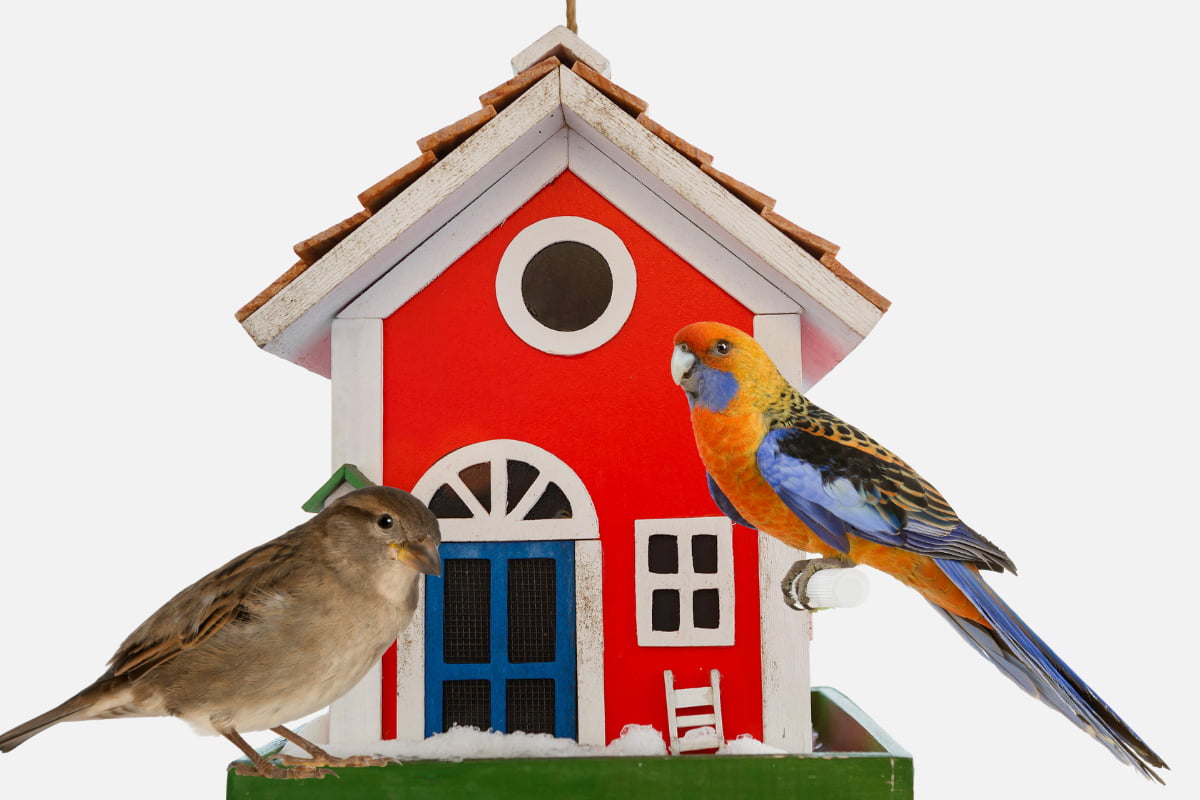
Hanging bird feeders are one of the most common of the many types of bird feeders available, and a good way to attract birds to your yard or garden. They come in metal, plastic, or glass, and typically feature a central rod for hanging, with a bowl or mesh-covered tray at the bottom to hold the seed and limit spills.
They can be hung from trees, fences, hooks, or eaves, depending on the birds you want to attract and how much shelter your yard offers.
This guide covers the main types of hanging feeders, where to hang them safely, what food to use, and the real trade-offs (not just the upsides) of choosing a hanging feeder over a ground, post, or window-mounted one.
What is a Hanging Bird Feeder?
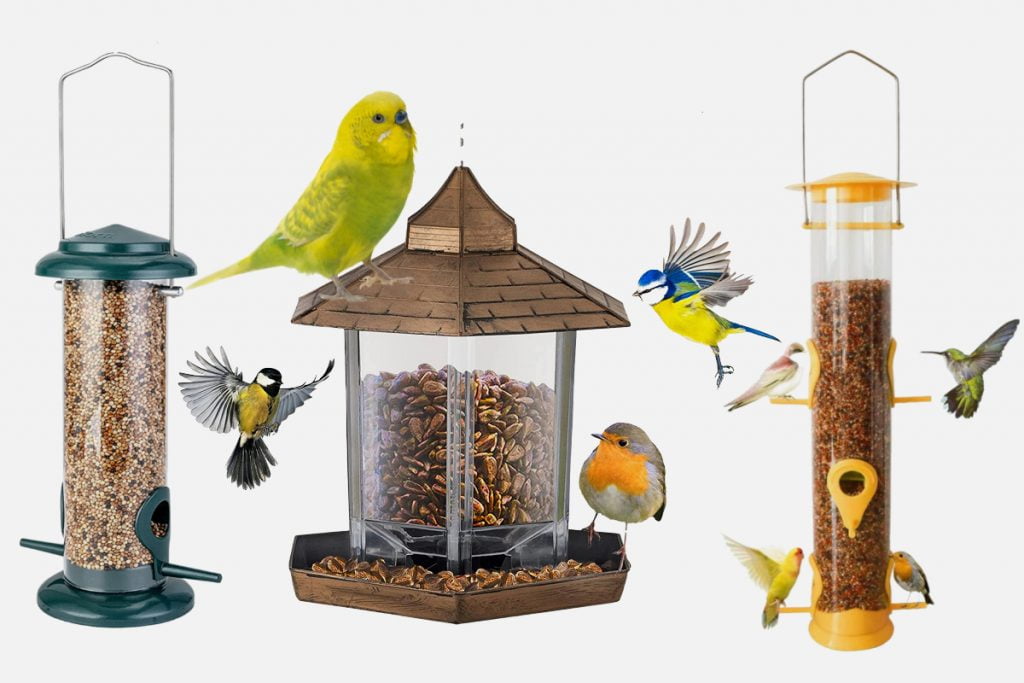
A hanging bird feeder is suspended from a branch, hook, or bracket rather than mounted on a pole or set on the ground. Most have a circular or tubular body made from plastic, metal, or wood, with one or more feeding ports or a perch ring around the base. Because the whole feeder swings free, it’s harder for ground-based animals to reach than a tray sitting on a deck or post, though squirrels that can climb or jump to it are unaffected by height alone.
Types of Hanging Bird Feeders
Hanging feeders vary by material and by mechanism. Material affects durability and price; mechanism affects which birds (and which unwanted visitors) can use it.
Metal hanging bird feeders:
A metal hanging bird feeder is built to hang from a tree or hook and typically uses aluminium, steel, or copper. These types of bird feeders hold up well outdoors and resist squirrel chewing better than plastic, which is why most cage-enclosed and weight-activated squirrel-resistant feeders use a metal body or frame.
Plastic hanging bird feeders:
A plastic hanging bird feeder is the most common choice for casual bird feeding. Most have a clear or tinted body so you can see the bird seed level at a glance, plus a built-in perch. They cost less than metal or glass feeders and come in brighter colours, but they crack and discolour faster in direct sun and are easier for squirrels to gnaw through.
Glass hanging bird feeders:
A glass hanging bird feeder hangs from a hook or bracket and is usually chosen for how it looks as much as how it performs. Glass is durable against weather and UV fading, but it’s heavier and more expensive than plastic, and it can shatter if it’s knocked from its hook.
Spinning (swivel) hanging bird feeders:
A spinning or swivel bird feeder has a perch ring that rotates around the base. Some are purely decorative, giving birds an easy landing spot from any angle.
Others are built specifically as a squirrel deterrent: a squirrel’s weight on the perch triggers a motorised or spring-loaded spin that gently dislodges it, while lighter birds trigger nothing, an approach popularised by commercial feeders such as the Droll Yankees Yankee Flipper.
If you want the squirrel-deterrent version rather than the purely decorative one, check the product description for “weight-activated” or “motorised” before buying.
Hanging tray feeders:
A hanging tray feeder suspends a shallow, mesh-bottomed tray from chains or a bracket rather than mounting it on a post or deck rail. It gives ground-feeding birds like sparrows and juncos an elevated, more sheltered version of a platform feeder, with drainage holes or mesh to stop seed from turning mouldy in wet weather. Because it’s open on top, it offers the least protection from squirrels and larger birds of any hanging design.

Where to Hang Your Bird Feeder
Placement affects which birds visit and how safe they are once they do. If you want tree-feeding species such as chickadees and nuthatches, hang the feeder from a branch. If you want ground-feeders such as juncos and sparrows, a low hanging tray or platform feeder works better than a tall tube feeder.
Window strikes are a bigger risk than most people expect, and placement is the fix. Audubon’s guidance is to hang feeders either within about 3 feet of a window, so birds can’t build up enough speed to injure themselves if they do hit the glass, or more than 30 feet away, so they have room to see and avoid it.
The middle distance, roughly 3 to 30 feet, is the riskiest zone, since it gives birds enough speed to be hurt but not enough room to course-correct. If squirrels are a persistent problem at your feeder, keeping it well clear of any tree, fence, or roof they could jump from helps as much as the feeder design itself.
What Type of Bird Food to Use
Seed choice depends on which birds you’re trying to attract. Black oil sunflower seed draws the widest range of species and is a reasonable default if you’re not targeting anything specific. Nyjer (thistle) seed favours finches, while suet cakes suit woodpeckers and other birds that need extra calories in cold weather. Mixed blends attract more species overall, but expect more waste on the ground as birds sort through the mix for what they actually want.

Benefits and Drawbacks of Hanging Bird Feeders
Hanging feeders aren’t the right choice for every yard. Here’s an honest look at both sides before you buy one.
| Benefits | Drawbacks |
|---|---|
| Keeps food and birds off the ground, away from most ground predators | Metal and glass models cost more than post-mounted or ground feeders |
| Attracts a wide range of species, since most birds will use a hanging feeder | Needs cleaning every one to two weeks to prevent mould and disease spread |
| Easy to reposition if you want to change sightlines or move away from a window | Squirrels can reach most hanging feeders unless it’s a dedicated weight-activated or cage design |
| Gives you a close, convenient view for watching or photographing birds | Plastic bodies crack and fade faster than metal or glass in direct sun |

Conclusion
Hanging bird feeders are a solid starting point for most yards: they’re widely available, work for a broad range of species, and give you an easy view from indoors. The trade-off is upkeep and, in most areas, squirrel pressure, so budget for regular cleaning and be ready to switch to a weight-activated or cage-enclosed design if squirrels become the main visitor.
If you’re choosing your first feeder, start with a metal or glass body for durability, hang it either within 3 feet of a window or beyond 30 feet to avoid collisions, and stock it with black oil sunflower seed as a reliable default before narrowing your seed choice to specific species.
Let us know in the comments which type of hanging feeder works best in your yard.
References:
About Bird Feeder (Wikipedia).
“Think You Have a Bird-Friendly Backyard? Think Again,” Audubon magazine, on window-collision placement.
“The Best Squirrel-Proof Bird Feeders, Plus 12 Deterrent Tips That Actually Work,” Birds & Blooms, on spinning and weight-activated feeder mechanisms.
