

In Western Australia, south of the Kimberley and including metropolitan Perth, rainbow lorikeets are officially declared pests. They strip fruit from backyard gardens and commercial crops, damage vineyards in the Swan Valley, and foul vehicles with their droppings. They also create noise from as early as 4:30 am, right through until dusk.
On top of that, they aggressively push out native birds that nest in tree hollows, and they can spread Psittacine beak and feather disease to other birds.
Rainbow lorikeets have been establishing feral populations in the region since 1968, which means they are also classed as managed fauna in areas south of the Kimberley under Western Australian biodiversity legislation.
There is much more to know about the damage they cause and the legal options available for controlling them.
Key Takeaways
- In Western Australia, south of the Kimberley, including Perth, rainbow lorikeets are officially declared pests under state legislation.
- Feral lorikeets cause serious damage to backyard fruit trees, commercial orchards, and vineyards, including table and wine grapes grown in the Swan Valley.
- Their constant screeching starts as early as 4:30 am, disturbing sleep and making it hard for residents to work or relax outdoors.
- Lorikeets compete aggressively with native birds for food and nesting hollows, which reduces the breeding success of species that depend on tree hollows.
- Legal control methods include netting, scaring devices, and licensed shooting. Poisoning, trapping, and relocating the birds are all prohibited.
What Makes Rainbow Lorikeets a Pest?

Rainbow lorikeets are colourful, intelligent birds and are native to parts of northern and eastern Australia. However, in Western Australia, they are not considered part of the natural local ecosystem.
Across Western Australia south of the Kimberley, including metropolitan Perth, rainbow lorikeets are officially treated as declared pests. The feral Perth population is believed to have started from birds that escaped or were released into the wild around 1968, and it has continued to grow since then.
Their pest status is not based on appearance or noise alone. It comes from the real damage they can cause to crops, property, and native wildlife.
In gardens and farming areas, rainbow lorikeets feed heavily on fruit and flowering plants. They can strip backyard fruit trees, damage commercial orchards, and cause losses in vineyards, including table and wine grapes grown in the Swan Valley.
Noise is another major issue, especially around large roosting sites. Their loud screeching can begin around dawn and continue through feeding and roosting periods, which can disturb residents and make outdoor spaces less enjoyable.
The bigger environmental concern is their effect on native birds. Rainbow lorikeets compete aggressively for food and nesting hollows. This is especially harmful to native species that rely on tree hollows for breeding.
Around flowering trees, they may also drive away native nectar-feeding birds such as honeyeaters, reducing access to important natural food sources.
There are also hygiene and bird-health concerns. Their droppings can foul vehicles, paths, outdoor furniture, and public areas. They can also carry Psittacine beak and feather disease, which may pose a risk to wild and captive parrots.
Where Are Rainbow Lorikeets a Declared Pest?

Across Western Australia, rainbow lorikeets are declared pests in all areas south of the Kimberley region. This declaration covers the entire southern part of the state, including metropolitan Perth.
These declarations aren’t limited to a few isolated suburbs or towns; they apply across the whole region.
Perth falls squarely within this framework. The city has an established wild population that traces back to escaped and released birds from around 1968.
In the south-west specifically, the birds are also recognised as “acclimatised fauna,” which acknowledges that they’ve been living wild in the area for a long time.
This dual classification as both a pest and acclimatised fauna directly justifies active control measures, including shooting in designated areas.
The declaration isn’t arbitrary; it’s a response grounded in documented evidence of the birds’ spread and ecological establishment. In the wild, rainbow lorikeets compete aggressively with native species for access to nectar and pollen from the same flowering trees and shrubs that local wildlife depend on.
What Damage Do Rainbow Lorikeets Cause to Crops and Property?

Rainbow lorikeets are officially classed as pests because they cause real, well-documented damage to crops and property. They strip fruit from backyard citrus trees, palms, and ornamental plants, leaving behind little to no usable produce. In commercial areas like Swan Valley vineyards and Perth Hills orchards, flocks return season after season, causing serious losses.
| Damage Type | Location | Impact |
|---|---|---|
| Fruit stripping | Backyard trees | Lost yield, damaged produce |
| Crop soiling | Vineyards, orchards | Reduced commercial value |
| Outdoor nuisance | Roosting sites | Restricted outdoor use |
| Vehicle fouling | Suburban properties | Ongoing cleaning burden |
If you live near an active roost site, noise can also become a serious nuisance. Rainbow lorikeets are loud, social birds, and their screeching can begin around dawn and continue through feeding and roosting periods.
They also compete with native birds for food, especially around flowering trees, fruiting plants, and other reliable feeding areas. When large groups gather in the same places, this can increase pressure on local food sources and make crop damage worse.
Rainbow lorikeets are highly adaptable feeders. They quickly take advantage of easy food sources such as backyard fruit trees, commercial crops, flowering plants, and ornamental trees.
Are Rainbow Lorikeets Bad for Native Birds?
Rainbow lorikeets don’t just affect crops and property. They’re also a real threat to native bird communities. Their aggressive competition for food and nesting hollows pushes out smaller native species, reducing breeding success across remnant bushland.
Pairs actively defend breeding sites and block access for cavity-dependent natives, which makes their hollow takeover behaviour particularly damaging.
Lorikeet pairs aggressively defend nest hollows, locking cavity-dependent native species out of critical breeding sites.
In Perth and southern WA, their high mobility and ability to exploit flowering and fruiting resources speeds up community decline by shifting local bird populations toward lorikeet dominance.
Their noisy, persistent presence reinforces displacement from preferred foraging areas.
They also spread Psittacine beak and feather disease (PBFD), adding further pressure on wild parrot populations.
The combined effect of nesting displacement, resource monopolisation, and disease transmission makes rainbow lorikeets a measurable ecological disruptor in Australia’s native bird communities.
If sick or diseased lorikeets are appearing at backyard feeders, feeding should be stopped immediately and all equipment cleaned thoroughly with a bleach solution for feeders to prevent further spread of disease to other birds.
How Do You Legally Control Rainbow Lorikeets?
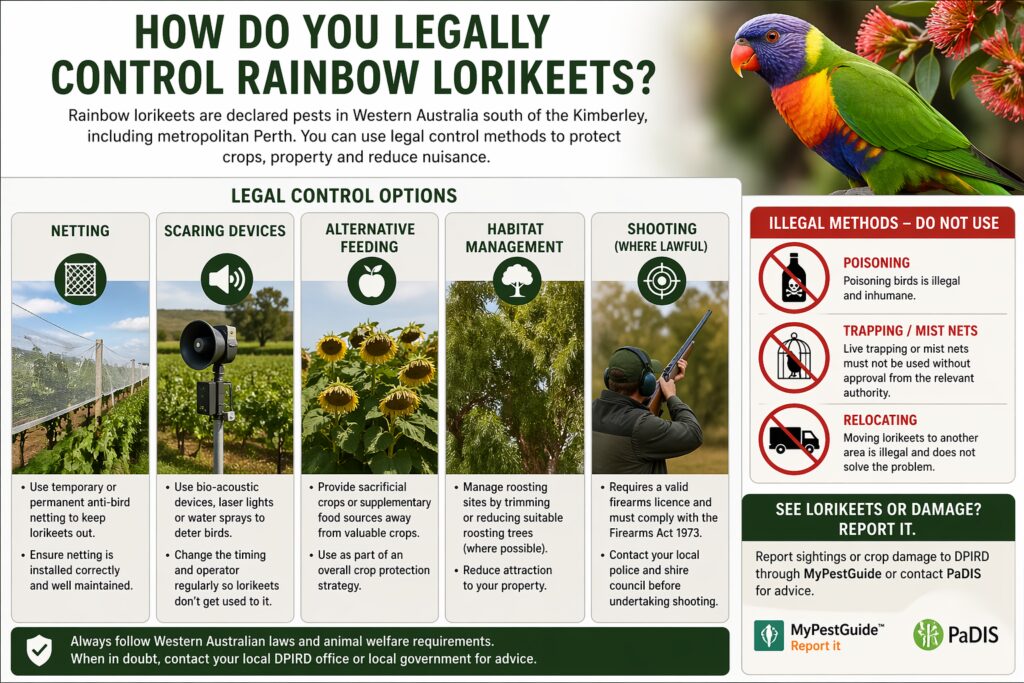
Because rainbow lorikeets are declared pests in Western Australia south of the Kimberley (including metropolitan Perth), you have several legal ways to control them. These methods focus on staying within the law while keeping people safe.
They work best when targeting areas where birds feed, rest, and roost.
- Netting: Cover crops with temporary or permanent anti-bird netting to keep lorikeets out.
- Scaring devices: Use bio-acoustic devices, laser lights, or fire hoses to frighten birds away. Change up the timing and who operates them so the birds don’t get used to them.
- Alternative feeding: Draw birds away from your main crops by setting up sacrificial crop corners or placing supplementary food sources at a distance.
- Shooting: Obtain the proper licence under the Firearms Act 1973. Speak with your local police and shire council before getting started.
Do not poison or relocate rainbow lorikeets, as these methods are illegal in Western Australia. Live trapping, mist nets, or similar capture methods must not be used unless you have the proper approval from the relevant authority.
If you see rainbow lorikeets in your area, or notice damage to crops, fruit trees, or property, report the sighting to DPIRD through MyPestGuide or contact PaDIS for advice.
The safest approach is to use lawful, non-lethal prevention methods first, such as crop netting, roost deterrents, and approved scaring techniques. Where stronger control is needed, it should only be carried out in line with Western Australian law and animal welfare requirements.
Final Thought
Rainbow lorikeets can cause serious problems depending on where they live. In Western Australia, they damage native wildflowers and destroy fruit crops, which makes them a real concern for farmers and conservationists alike.
When these birds settle in areas where they do not naturally belong, the results can be damaging. They push out native species, disrupt local ecosystems, and cost agricultural industries significant amounts of money. The evidence shows that uncontrolled populations can cause lasting harm to the environment around them.
Without proper management strategies in place, these striking birds will keep spreading into new territories. This creates growing problems that are difficult to reverse, both for wildlife and for the economy. Sensible, well-regulated removal programmes are important if we want to keep these impacts under control.
