

Smart bird feeders with cameras have revolutionised backyard birdwatching technology, transforming it from passive observation into an interactive, AI-powered experience.
These intelligent bird feeding systems combine traditional bird feeding with cutting-edge camera technology, species identification software, and smartphone connectivity to bring nature closer than ever before.
Key Takeaways
- Smart bird feeders with cameras offer real-time bird watching with AI-powered species identification
- Solar-powered models provide maintenance-free operation for year-round use
- Leading brands include Bird Buddy, Netvue Birdfy, and SOLIOM, with proven reliability
- 1080p HD cameras with night vision capture stunning bird photography automatically
- Prices range from $80-$300, with subscription services for advanced AI features
- Weather-resistant designs withstand harsh outdoor conditions year-round.
What Are Smart Bird Feeders with Cameras?
Smart bird feeders with cameras are automated bird feeding devices equipped with high-definition cameras, motion sensors, and wireless connectivity. These devices automatically detect when birds visit, capture photos or videos, and send notifications to your smartphone. Advanced models feature AI bird identification that can recognise thousands of species, turning every garden visit into an educational experience.
The technology combines traditional bird feeding principles with modern surveillance camera technology, machine learning algorithms, and cloud storage systems. When birds approach for food, motion detection sensors trigger the camera to record, while AI software analyses the footage to identify species and behaviour patterns.
Top 6 Smart Bird Feeders with Camera for Your Backyard

1. Bird Buddy PRO Solar Smart Bird Feeder with Camera
Best Overall Choice for Premium Experience.
Key Features:
- 2K HD camera with 5MP photo quality
- Built-in solar charging panel for continuous operation
- AI recognition of over 3,000 bird species
- Weather-resistant IP65 rating
- Colour night vision for nocturnal visitors.
Performance Analysis: The Bird Buddy Pro delivers exceptional image quality with its upgraded camera system. The solar roof integration eliminates charging concerns, while the intuitive mobile app provides detailed species information and behavioural insights. Professional ornithologist verification ensures AI accuracy remains consistently high.
Price: $199-299 | Customer Rating: 4.3/5 stars.
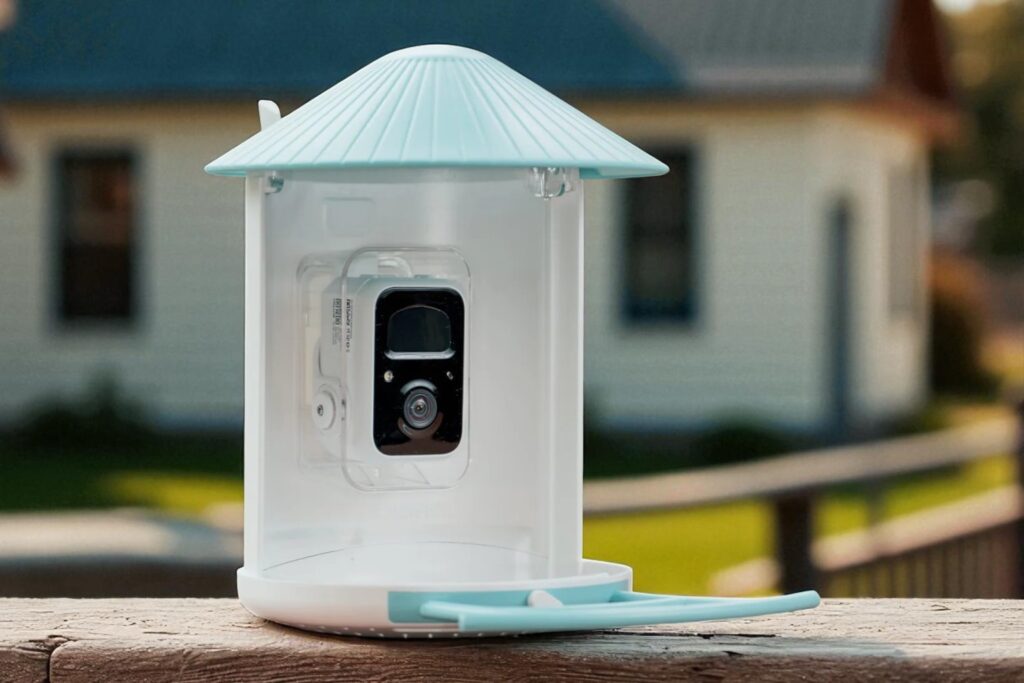
2. NETVUE by Birdfy Smart Bird Feeder Camera
Best Value for AI Bird Recognition.
Key Features:
- 1080p HD camera with 135-degree wide-angle view
- Advanced AI database with 6,000+ species recognition
- Motion detection with instant push notifications
- Optional solar panel for extended battery life
- Cloud storage with free 30-day retention.
Performance Analysis: The Birdfy feeder excels in notification frequency and species accuracy. Its wide-angle lens captures multiple birds simultaneously, while the comprehensive AI database correctly identifies even uncommon North American species. The separate solar panel allows optimal positioning for maximum charging efficiency.
Price: $149-229 | Customer Rating: 4.1/5 stars.
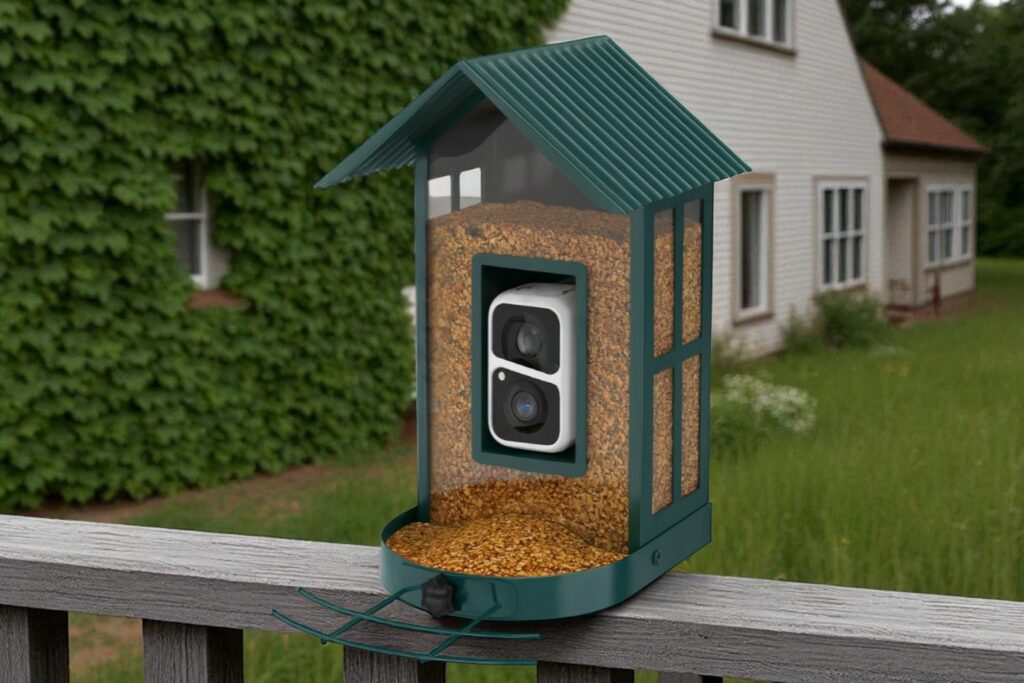
3. SOLIOM® Smart Bird Feeder with Camera
Best Budget Option with Essential Features.
Key Features:
- 1080p HD recording with motion activation
- AI species identification with regular database updates
- Solar charging compatibility for eco-friendly operation
- Weatherproof construction for year-round outdoor use
- Mobile app integration with social sharing features
Performance Analysis: SOLIOM’s feeder provides excellent entry-level smart feeding capabilities without premium pricing. The AI recognition performs reliably for common backyard birds, while the robust construction withstands typical weather conditions across various climates. Solar compatibility makes it ideal for cost-conscious bird enthusiasts.
Price: $99-159 | Customer Rating: 4.0/5 stars.

4. Smart Bird Feeder with Camera – 1 Year AI
Best for Extended AI Service.
Key Features:
- 1080p HD video recording capability
- 1 Year Free AI bird identification service
- Solar-powered operation for eco-friendly use
- 2.4GHz WiFi connectivity
- Instant arrival alerts via mobile notifications.
Performance Analysis: This value-oriented smart feeder includes a full year of AI bird identification service, making it excellent for beginners wanting to explore smart birdwatching without immediate subscription costs. The solar power system ensures continuous operation, while the generous seed capacity reduces maintenance frequency.
Price: $89-149 | Customer Rating: 3.8/5 stars.

5. oddkont Smart Bird Feeder with Camera
Best for High-Resolution Recording.
Key Features:
- 2K HD camera with superior image quality
- AI bird species identification
- Auto-record bird video with instant notifications
- Solar panel included for sustainable operation
- Live stream capability for real-time viewing.
Performance Analysis: The oddkont smart feeder delivers professional-grade video quality that captures stunning detail of visiting birds. The included solar panel provides reliable power, while the 2K resolution ensures crisp, clear footage suitable for social media sharing and wildlife photography. Instant notifications keep users informed of all bird activity.
Price: $119-179 | Customer Rating: 4.0/5 stars.

6. Birdfy Smart Bird Feeder Camera – Durable Metal
Best for Maximum Durability.
Key Features:
- Premium metal construction with rust-resistant coating
- Chew-proof design against squirrels and rodents
- Auto-identify and notify bird species detection
- Solar powered with wireless outdoor capability
- Weather-resistant for harsh conditions.
Performance Analysis: The Birdfy Metal stands out for its exceptional durability and squirrel-proof design. Premium metal construction with rust-resistant coating ensures years of reliable operation, while the chew-proof design protects against destructive wildlife. Advanced AI continues the Birdfy tradition of accurate species identification.
Price: $199-279 | Customer Rating: 4.2/5 stars.
Comprehensive Comparison Table
| Model | Resolution | AI Recognition | Power Source | Storage | Price Range | WiFi Required |
|---|---|---|---|---|---|---|
| Bird Buddy Pro Solar | 2K/5MP | 3,000+ species | Solar/Battery | Cloud | $199-299 | Yes (2.4GHz) |
| Netvue Birdfy | 1080p HD | 6,000+ species | Battery/Solar | Cloud/SD | $149-229 | Yes (2.4GHz) |
| SOLIOM Smart | 1080p HD | 1,000+ species | Battery/Solar | Cloud | $99-159 | Yes (2.4GHz) |
| Smart Feeder 1-Year AI | 1080p HD | 1 Year Free | Solar/Battery | Cloud | $89-149 | Yes (2.4GHz) |
| oddkont Smart | 2K HD | AI Identification | Solar/Battery | Local/Cloud | $119-179 | Yes (2.4GHz) |
| Birdfy Metal | 1080p HD | Advanced AI | Solar/Battery | Cloud | $199-279 | Yes (2.4GHz) |
Related Articles:
- How to Attract Goldfinches to Your Garden Year-Round – Discover proven strategies for attracting these vibrant birds with specialised feeding techniques and habitat modifications.
- How a Water Fountain Draws Hummingbirds to Your Yard – Learn about integrating water features with your smart feeding setup to create an irresistible garden sanctuary.
How Smart Bird Feeder Cameras Work
Motion Detection Technology
Smart bird feeders utilise passive infrared sensors (PIR) to detect heat signatures from approaching birds. When triggered, the camera system activates within milliseconds, ensuring capture of bird arrival moments. Advanced algorithms filter out false triggers from wind-blown vegetation or small insects.
AI Species Recognition Process
Machine learning algorithms analyse captured images using neural networks trained on millions of bird photographs. The system examines distinctive features including beak shape, plumage patterns, body size, and behavioural characteristics. Confidence scores indicate identification accuracy, with uncertain classifications flagged for manual verification.
Connectivity and Notifications
WiFi connectivity enables real-time data transmission to cloud servers and mobile applications. Push notifications include species identification, timestamp information, and thumbnail images. Advanced models support multiple user accounts and family sharing features for collaborative bird watching experiences.
Essential Buying Guide: Choosing Your Perfect Smart Bird Feeder
Camera Quality and Specifications
Resolution Requirements
- 1080p HD: Adequate for basic bird identification and social media sharing
- 2K/4K: Professional quality for detailed photography and scientific observation
- Night vision: Essential for nocturnal species and 24-hour monitoring.
Viewing Angles
- Narrow (90°): Close-up shots with limited coverage area
- Wide (120-135°): Comprehensive coverage capturing multiple birds simultaneously
- Ultra-wide (170°+): Maximum coverage but potential image distortion.
AI Recognition Capabilities
Database Size and Accuracy Modern AI systems recognize between 1,000-10,000 bird species globally. Regional databases focus on local bird populations, seasonal migrants, and rare visitors. Accuracy rates vary from 70-95% depending on lighting conditions, image quality, and species rarity.
Learning and Updates Cloud-based AI systems continuously improve through user feedback and additional training data. Subscription services often provide database updates, new species additions, and improved recognition algorithms. Some systems allow manual corrections to enhance future accuracy.
Power Management Solutions
Solar Charging Systems Solar panels provide sustainable power for continuous operation. Integrated panels offer aesthetic appeal but limited positioning flexibility. Separate panels allow optimal sun exposure but require additional mounting hardware. Battery backup ensures operation during cloudy periods.
Battery Life Considerations Standard batteries typically last 2-6 months, depending on activity levels and feature usage. Motion-triggered recording conserves power compared to continuous streaming. Low-power modes extend battery life at the cost of reduced functionality.
Weather Protection and Durability
IP Rating Standards
- IP65: Dust-proof with water jet protection – suitable for most climates
- IP66: Enhanced water protection against heavy rain and washing
- IP67: Temporary submersion protection for extreme weather events.
Material Construction Polycarbonate plastics provide impact resistance and UV stability. Aluminium components offer superior durability but increased weight. Stainless steel hardware prevents corrosion in humid environments.
Installation and Setup Guide
Optimal Placement Strategies
Height and Distance Position feeders 5-6 feet high to deter ground predators while remaining accessible for maintenance. Maintain 7-10 feet distance from dense vegetation to prevent surprise predator attacks yet provide nearby shelter for nervous birds.
WiFi Signal Considerations: Test wireless signal strength at proposed locations using smartphone apps. WiFi extenders or mesh networks may be necessary for distant installations. Direct line-of-sight to wireless routers improves connection stability and reduces dropouts.
Initial Configuration Process
Mobile App Setup: Download the manufacturer’s official applications from verified app stores. Create user accounts with strong passwords and enable two-factor authentication where available. Grant necessary permissions for camera access, location services, and push notifications.
Network Configuration: Connect feeders to 2.4GHz WiFi networks (most common requirement). 5GHz networks offer faster speeds but reduced range. Guest networks provide security isolation from the main home networks. WPA3 encryption offers enhanced security over older WPA2 protocols.
Maximising Your Smart Bird Feeder Experience
Attracting More Bird Species
Seed Selection Strategies: Different seeds attract specific bird types. Sunflower hearts appeal to finches and chickadees, while nyjer seeds specifically attract goldfinches. Mixed seed blends provide variety but may result in selective feeding and waste. Seasonal seed rotation accommodates changing dietary needs and migration patterns.
Consider combining your smart feeder setup with knowledge from our guide on how to attract goldfinches to your garden year-round to maximise the variety of species visiting your feeder.
Water Feature Integration: Moving water attracts birds more effectively than static sources. Shallow basins (1-2 inches deep) accommodate various bird sizes. Dripping sounds from fountains or dripper systems signal fresh water availability to birds. Learn more about how a water fountain draws hummingbirds to your yard for comprehensive water feature guidance.
Data Analysis and Record Keeping
Species Tracking Mobile applications automatically log species visits, frequency patterns, and seasonal variations. Export capabilities allow data analysis in spreadsheet applications for citizen science projects. Photo galleries document species diversity and individual bird identification.
Behaviour Documentation: Time-stamped recordings reveal feeding patterns, social interactions, and territorial behaviours. Slow-motion playback highlights wing movement patterns and feeding techniques. Long-term datasets contribute to ornithological research and conservation efforts.
Troubleshooting Common Issues
Connectivity Problems
WiFi Signal Issues: Intermittent connections often result from insufficient signal strength or network congestion. WiFi analysers identify optimal channels and signal interference. Range extenders or mesh systems improve coverage in challenging environments.
Application Synchronisation App crashes or sync failures may require cache clearing or application reinstallation. Operating system updates sometimes affect app compatibility. Manufacturer support typically provides firmware updates and troubleshooting guidance.
Hardware Maintenance
Cleaning and Care Regular cleaning maintains camera clarity and prevents bacterial growth. Use mild soap solutions and soft brushes to avoid lens scratching. Quarterly deep cleaning includes seed compartment sanitisation and moving parts lubrication.
Weather Damage Prevention Extreme weather can damage electronic components despite IP ratings. Temporary removal during severe storms protects sensitive equipment. Annual maintenance includes seal inspection and mounting hardware tightening.
Cost Analysis and Subscription Services
Initial Investment Breakdown
Device Costs Entry-level models ($80-150) provide basic functionality with limited AI features. Mid-range options ($150-250) offer comprehensive features with reliable performance. Premium models ($250+) include advanced AI, superior cameras, and extended warranties.
Accessory Requirements Mounting hardware may cost $20-60 additional. Solar panels range from $35 to $90, depending on size and efficiency. Extended warranties and insurance add 10-20% to total costs.
Ongoing Subscription Expenses
AI Recognition Services Basic AI is often included for free with limited species databases. Premium subscriptions ($5-12 monthly) unlock comprehensive databases and advanced features. Lifetime subscriptions ($60-200) may provide long-term savings for dedicated users.
Cloud Storage Plans Free storage typically includes 1-7 days of basic recordings. Extended storage ($3-10 monthly) provides 30+ days with higher quality options. Local storage eliminates subscription costs but limits remote access capabilities.
For those interested in broader bird management, including managing specific species, our article on how to keep blue jays away from bird feeders provides complementary strategies for optimising your feeding station.
Smart Feeder Security and Privacy
Data Protection Considerations
Personal Information Handling Smart feeders collect location data, usage patterns, and personal preferences. Privacy policies vary significantly between manufacturers. Data protection compliance ensures proper handling of user information.
Video Storage Security Cloud storage poses potential privacy risks if security breaches occur. Local storage provides greater control but limited backup options. Encryption protocols protect data transmission and storage security.
Network Security Best Practices
WiFi Protection: Use WPA3 encryption with strong passwords for network security. Regular password changes and firmware updates maintain security standards. Network isolation prevents unauthorised access to other connected devices.
Account Security: Two-factor authentication significantly improves account security. Unique passwords for each device account prevent credential reuse attacks. Regular security audits identify potential vulnerabilities.
Environmental Impact and Sustainability
Eco-Friendly Features
Solar Power Benefits Solar charging reduces environmental impact and operating costs. High-efficiency panels provide reliable power even during limited sunlight periods. Battery recycling programs ensure responsible disposal of rechargeable components.
Wildlife Conservation Smart feeders contribute to citizen science projects and bird population monitoring. Data collection supports conservation research and habitat protection initiatives. Educational aspects promote wildlife awareness and environmental stewardship.
Future Technology Trends
AI and Machine Learning Advances
Recognition Improvements Next-generation AI will provide real-time behaviour analysis and individual bird identification. Edge computing reduces cloud dependency while improving response times. Multi-modal recognition combines visual, audio, and movement patterns.
Integration Possibilities: Smart home integration enables automated lighting and climate responses to bird activity. Weather prediction optimises feeder operation based on local conditions. Community networks share regional bird activity data.
Final Thoughts
Smart bird feeders with cameras represent the perfect fusion of traditional bird feeding and modern technology, transforming backyard birdwatching into an interactive educational experience. Whether choosing the premium Bird Buddy Pro for exceptional image quality, the versatile Netvue Birdfy for comprehensive AI recognition, or the budget-friendly SOLIOM for essential smart features, each model offers unique advantages for different user needs.
Success depends on matching your specific requirements with appropriate technology features, considering both initial costs and ongoing subscription expenses, and understanding the commitment required for optimal performance. Regular maintenance, proper installation, and strategic seed selection maximise bird diversity and system reliability.
Smart bird feeders not only provide entertainment and education but also contribute to citizen science and wildlife conservation efforts. As AI technology continues advancing and prices decrease, these intelligent feeding systems will become increasingly accessible to bird enthusiasts across all experience levels.
Investment in a quality smart bird feeder yields years of fascinating bird observations, stunning photography, and a deeper connection with local wildlife. Choose the model that best fits your budget, technical comfort level, and birdwatching goals to begin your smart birding journey.
Frequently Asked Questions
Q: How accurate is AI bird identification in smart feeders?
A: AI accuracy varies by manufacturer and conditions, typically ranging from 70-95%. Leading brands like Bird Buddy and Birdfy achieve 85-90% accuracy for common North American species under good lighting. Accuracy decreases with poor weather, unusual angles, or rare species. Premium subscriptions often provide more comprehensive databases and higher accuracy rates.
Q: Do smart bird feeders work without an internet connection?
A: Basic recording functions work offline on most models, but AI identification and smartphone notifications require internet connectivity. Local storage options like SD cards preserve recordings during connection outages. Some advanced models include edge computing for offline AI processing, though accuracy may be reduced compared to cloud-based systems.
Q: How long do batteries last in smart bird feeders?
A: Battery life varies significantly based on usage patterns and environmental conditions. Typical ranges:
- Heavy use (frequent recordings): 2-4 weeks
- Moderate use (daily visits): 1-3 months
- Light use (occasional visitors): 3-6 months Solar panels extend operation indefinitely in adequate sunlight, while motion-only activation conserves power compared to continuous recording.
Q: What bird species do smart feeders identify?
A: Comprehensive databases recognise 500+ North American bird species, including common backyard birds, seasonal migrants, and occasional rarities. Common identifications include cardinals, blue jays, goldfinches, robins, and chickadees. Regional variations and subspecies may require premium AI services. Manual correction features help improve accuracy for local populations.
Q: Are smart bird feeders weatherproof for outdoor use?
A: Quality models feature IP65-IP67 ratings providing excellent protection against rain, snow, and wind. Weather-tested products withstand temperature ranges from -4°F to 104°F with relative humidity up to 95%. Extreme conditions like flooding or ice storms may require temporary removal despite weather ratings.
Q: Can multiple users access one smart bird feeder?
A: Most systems support family sharing with 2-5 user accounts per device. Administrative controls manage permissions for viewing, downloading, and deleting content. Premium subscriptions often include expanded sharing options and collaborative features for educational or research purposes. Guest access provides temporary viewing without full account privileges.
Q: What maintenance is required for smart bird feeders?
A: Regular maintenance includes:
- Weekly: Refill seeds, clean camera lens, check connections
- Monthly: Deep clean seed compartment, inspect seals and mounting
- Seasonally: Full disassembly cleaning, battery condition check, firmware updates
- Annually: Professional inspection of electronics and weatherproofing. Neglected maintenance significantly reduces performance and lifespan.
Q: Do smart bird feeders attract more birds than regular feeders?
A: Smart feeders don’t inherently attract more birds than traditional feeders of similar design and seed types. Bird attraction depends on location, food quality, water availability, and local habitat. However, data tracking reveals visit patterns and preferences, enabling optimisation of seed selection and placement for increased activity.
Q: What subscription costs should I expect?
A: Subscription pricing varies by manufacturer and feature level:
- Basic AI: Free to $3/month for limited species
- Premium AI: $5-12/month for comprehensive databases
- Cloud storage: $3-10/month for extended retention
- Advanced features: $10-18/month for complete packages. Annual payments often provide 20-30% discounts. Lifetime options range $60 to $250, depending on included services.
Q: How do I position my smart bird feeder for best results?
A: Optimal placement considers multiple factors:
- Height: 5-6 feet above ground for security and accessibility
- Distance: 7-10 feet from dense cover for predator protection
- Direction: North-facing or shaded positions reduce glare
- WiFi: Strong signal areas ensure reliable connectivity
- Maintenance: Easy access for cleaning and refilling. Experiment with locations using traditional feeders before installing expensive smart systems.
Q: Can smart bird feeders help with bird research or conservation?
A: Smart feeder data contributes valuable citizen science information, including species distribution, population trends, migration patterns, and climate change impacts. Many manufacturers partner with research institutions and conservation organisations to aggregate anonymous data. Participation is typically voluntary through opt-in programs that share behavioural observations while protecting personal information.
