
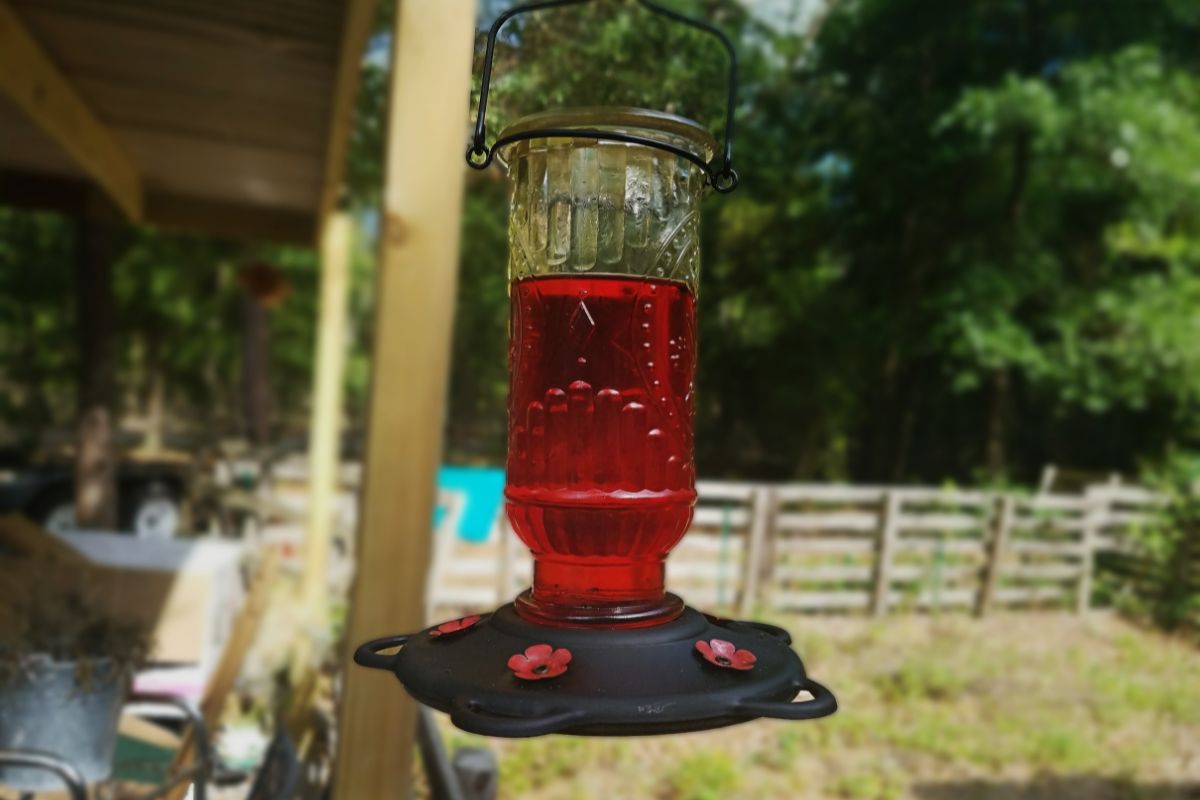
No, you should not put red food colouring in a hummingbird feeder. Hummingbirds do not need dyed nectar to find a feeder, and artificial colouring provides no nutritional benefit. The safer choice is clear nectar made with refined white granulated sugar and water.
Wildlife organisations advise leaving red dye out because it is unnecessary and could be harmful. Direct research on artificial food dyes in hummingbirds is limited, so claims that a specific amount will poison or kill a bird should be treated with care. Even so, there is no good reason to expose hummingbirds to an avoidable additive.
Can You Put Red Food Colouring in a Hummingbird Feeder?
No. Do not add red food colouring to hummingbird nectar. Artificial dye provides no nutritional benefit, is not needed to attract hummingbirds, and could pose a health risk. Use clear nectar made from one part refined white sugar and four parts water, then rely on the feeder’s red parts or nearby flowers for colour.
Key Takeaways
- Clear nectar is enough: A red feeder or brightly coloured flowers can help hummingbirds notice the feeding area.
- Use the correct recipe: Mix one part refined white granulated sugar with four parts water.
- Avoid unnecessary additives: Do not use red dye, honey, corn syrup, artificial sweeteners, powdered sugar, or raw and unprocessed sugars.
- Keep the feeder clean: Replace the nectar regularly and clean the feeder each time you refill it.
- Act if you have already used dye: Empty the feeder, wash and rinse it thoroughly, and refill it with fresh clear nectar.
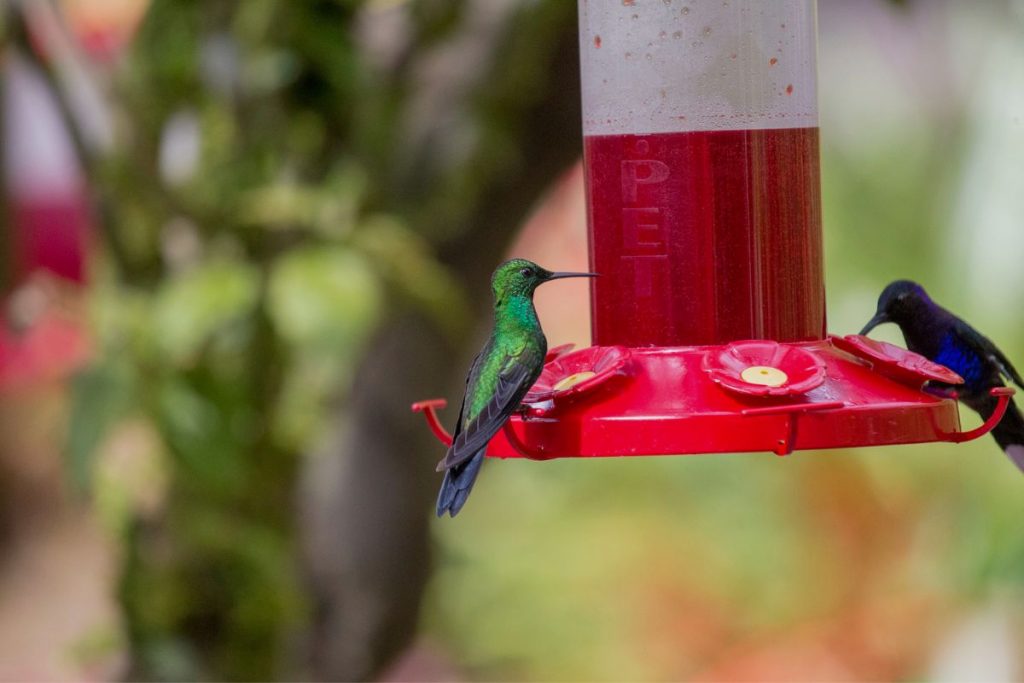
Why Should You Avoid Red Food Colouring in Hummingbird Nectar?
Red food colouring should be avoided because it adds no benefit and creates an unnecessary risk. Natural flower nectar is clear, and hummingbirds can find a feeder without coloured liquid. The red lid, feeding ports, flowers, or other bright parts of the feeder are normally enough to catch their attention.
There is an important evidence point to understand. Audubon notes that direct scientific studies on artificial dyes and hummingbirds are lacking. That means it is not accurate to claim that every red dye exposure will make a hummingbird ill or that a known dose will cause death. However, experts still advise against dye because artificial colouring is unnecessary and may pose a risk.
Leaving dye out is a simple precaution. It gives hummingbirds the energy they need from sugar water without adding ingredients that do not belong in the recipe.
What Should You Put in a Hummingbird Feeder Instead?
Use clear homemade nectar made from one part refined white granulated sugar and four parts clean water. For example, mix 1/4 cup of sugar with 1 cup of water. Stir until the sugar has fully dissolved and allow the mixture to cool before filling the feeder.
Safe tap water does not have to be boiled, according to the Smithsonian’s National Zoo. Warm or boiled water can make the sugar easier to dissolve, but the nectar must be completely cool before it goes into the feeder. Make only as much as you can use while it is fresh.
| Ingredient | Use it? | Reason |
|---|---|---|
| Refined white granulated sugar and water | Yes | This is the standard feeder recipe when mixed at one part sugar to four parts water. |
| Red food colouring or dyed nectar | No | It is unnecessary and could pose a health risk. |
| Honey | No | Diluted honey can support unwanted microbial growth. |
| Raw, brown, or unprocessed sugar | No | Use refined white sugar only, as recommended by bird-care authorities. |
| Powdered sugar | No | It often contains extra ingredients such as cornstarch. |
| Artificial sweeteners or corn syrup | No | They are not suitable substitutes for the standard sugar-water recipe. |
The 1:4 ratio matters. A mixture that is much stronger or weaker than recommended is not a better choice. For more detail, read our guide to using the correct amount of sugar in a hummingbird feeder.
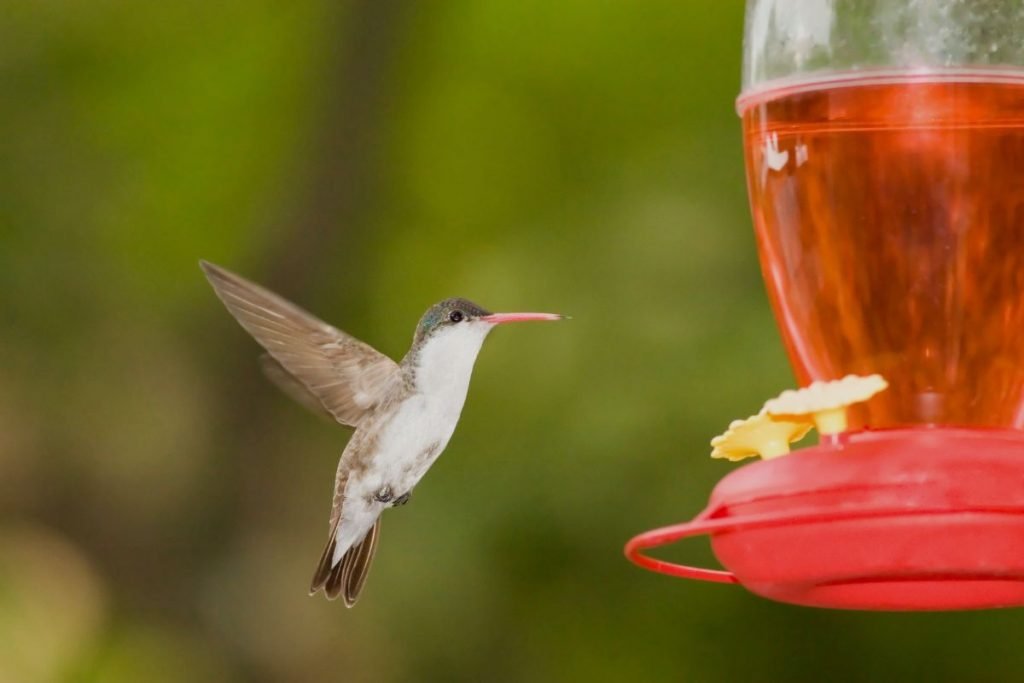
Does Clear Nectar Still Attract Hummingbirds?
Yes, clear nectar can attract hummingbirds. The liquid does not need to be red. Hummingbirds notice bright colours, but they also learn where reliable food sources are located and return to feeders that provide fresh sugar water.
Choose a feeder with red or brightly coloured feeding ports rather than colouring the nectar. A hummingbird feeder is a specialised nectar feeder, so its design differs from seed, suet, platform, and tube feeders. Our guide to the different types of bird feeders explains which feeder styles suit different birds and foods.
You can also make the area easier to find by planting nectar-rich flowers. Red, orange, and pink tubular flowers are often useful, but nectar value and a dependable food source matter more than dyeing the liquid. See our list of plants that attract hummingbirds for garden ideas.
What Should You Do If You Already Used Red Food Colouring?
Do not panic. A single exposure does not prove that a hummingbird has been harmed. The sensible response is to remove the dyed nectar and return the feeder to the recommended clear sugar-water mixture.
- Empty all coloured nectar from the feeder.
- Take the feeder apart and clean the reservoir, base, feeding ports, and any small grooves.
- Rinse every part thoroughly so no cleaner or coloured residue remains.
- Refill the feeder with one part refined white sugar and four parts water.
- Check the nectar each day for cloudiness, mould, insects, leaks, or a sour smell.
How Do You Keep Hummingbird Nectar Safe and Fresh?
Use the Clear Nectar Safety Check each time you service the feeder:
- Clear: Fresh nectar should be colourless and free from cloudiness, mould, debris, or an unusual smell.
- Correct: Use one part refined white granulated sugar to four parts water, with no dye or other additives.
- Clean: Wash the feeder every time you replace the nectar, paying close attention to ports and narrow spaces.
- Change: Replace the nectar every one to two days in hot weather, daily during extreme heat or direct sun, and sooner if it becomes cloudy, mouldy, fermented, or contaminated.
Heat can make nectar spoil more quickly, so a feeder may need attention more often during hot weather. Place it in a shaded but visible location when possible, and use smaller amounts of nectar if the birds are not emptying the feeder. Our guide explains how often to change hummingbird nectar in hot weather.
Common Hummingbird Nectar Mistakes to Avoid
- Adding red food colouring because the feeder does not look bright enough.
- Using honey, brown sugar, raw sugar, powdered sugar, corn syrup, or artificial sweeteners.
- Leaving old nectar in the feeder until it becomes cloudy or develops mould.
- Refilling the feeder without cleaning the ports, base, and reservoir.
- Filling a large feeder completely when only a small amount is being consumed.
- Assuming that commercially prepared nectar is safe without checking for dye, flavouring, or other additives.
Conclusion
Red food colouring is not needed in a hummingbird feeder. Although direct research on artificial dyes in hummingbirds is limited, leading bird organisations advise against using it because it offers no benefit and could pose a risk.
Use clear nectar made from one part refined white sugar and four parts water. Let the feeder’s red parts and nearby nectar-rich flowers provide the colour. From this point forward, keep the recipe simple, clean the feeder at every refill, and replace the nectar as soon as it is no longer fresh.
Frequently Asked Questions
Q: Can red food colouring kill hummingbirds?
A: There is no established hummingbird-specific dose showing that red food colouring will kill a bird, and direct studies are limited. That uncertainty should not be mistaken for proof of safety. Artificial dye is unnecessary and may pose a risk, so bird organisations recommend using clear sugar water instead.
Q: Why are hummingbird feeders usually red?
A: Red and other bright colours can help make a feeder noticeable to hummingbirds. The colour should be part of the feeder, such as its lid, flowers, or feeding ports, rather than added to the nectar. Once hummingbirds find a reliable food source, they can remember its location and return.
Q: Is store-bought red hummingbird nectar safe?
A: A red commercial nectar is not the preferred choice because the colour is unnecessary. Check the label for artificial dye, flavouring, preservatives, or other additives. A simple homemade mixture of refined white sugar and water is cheaper, easy to prepare, and gives you full control over the ingredients.
Q: What is the correct hummingbird nectar recipe?
A: Mix one part refined white granulated sugar with four parts water. One small batch is 1/4 cup of sugar mixed with 1 cup of water. Stir until dissolved, allow the nectar to cool if warm water was used, and fill a clean feeder without adding dye or supplements.
Q: Can you use tap water for hummingbird nectar?
A: Yes, safe drinking water from the tap can be used to make hummingbird nectar. If local tap water is not suitable for people to drink, use a safe alternative. The water should be clean, and the sugar must be completely dissolved before the mixture is placed in the feeder.
Q: Do you have to boil water for hummingbird food?
A: No, potable tap water does not have to be boiled. Warm or boiled water may help the sugar dissolve, and some recipes use it for that reason. Always cool the mixture fully before filling the feeder. Clean equipment and frequent nectar changes matter more than relying on boiling alone.
Q: Can you use honey or brown sugar in a hummingbird feeder?
A: No. Use refined white granulated sugar only. Diluted honey can support unwanted fungal or bacterial growth, while brown, raw, and unprocessed sugars contain substances that are not part of the recommended feeder recipe. Artificial sweeteners and corn syrup should also be left out.
Q: How often should you change hummingbird nectar?
A: Change nectar every one to two days in hot weather, and daily during extreme heat or when the feeder sits in direct sun. Replace it immediately if it becomes cloudy, discoloured, mouldy, fermented, or contaminated by insects. Wash and rinse the feeder thoroughly each time before adding fresh nectar.
Q: What does spoiled hummingbird nectar look like?
A: Spoiled nectar may look cloudy, stringy, discoloured, or speckled with mould. It may also smell sour or fermented. Sticky leaks and heavy insect activity can signal that the feeder needs attention. Empty it immediately, clean every part, rinse well, and refill it with fresh clear nectar.
Q: What should you do after accidentally feeding red nectar?
A: Empty the coloured nectar, dismantle the feeder, and clean the reservoir, base, ports, and small openings. Rinse thoroughly and refill with the standard clear sugar-water recipe. There is no need to assume harm has occurred, but there is also no reason to continue using the dye.
Q: Can flowers attract hummingbirds without a feeder?
A: Yes. Nectar-rich flowers can attract hummingbirds and provide a natural feeding source. Tubular blooms in red, orange, or pink are often easy for hummingbirds to notice, but local native plants are usually the best choice. Avoid pesticides and provide a mix of flowers that bloom at different times.
Q: Will hummingbirds drink clear nectar from a feeder that is not red?
A: They can. Red accents may help a new feeder stand out, but nectar quality, feeder location, cleanliness, and a dependable supply also affect whether hummingbirds visit. A feeder does not have to be entirely red, and the nectar should remain clear regardless of the feeder’s colour.
Related Posts:
Best Hummingbird Feeders.
Hummingbird Feeder Guide.
Image Gallery: Red Food Colouring and Hummingbird Feeders
Sources
- Smithsonian’s National Zoo: Hummingbird Nectar Recipe
- Cornell Lab of Ornithology: Should I Use Red Food Coloring in Hummingbird Food?
- National Audubon Society: Are Hummingbirds Attracted to Red and Is Dyeing Their Food Safe?
- U.S. Fish and Wildlife Service: Humming into Autumn
- Oregon State University Extension: Hummingbird Garden and Feeder Guidance
